
Trinidad and Tobago Travel Guide: Safety, Entry Rules, Beaches, and the Dry Season
The state of emergency and the neighborhoods to skip, what a U.S. passport holder needs, which beaches are safe for swimming, and the months when the rain lets up.
- 90 days visa-free for U.S. citizens
- 1.6 in of rain in March, the driest month
- Left side of the road for drivers
- Same time as New York in summer
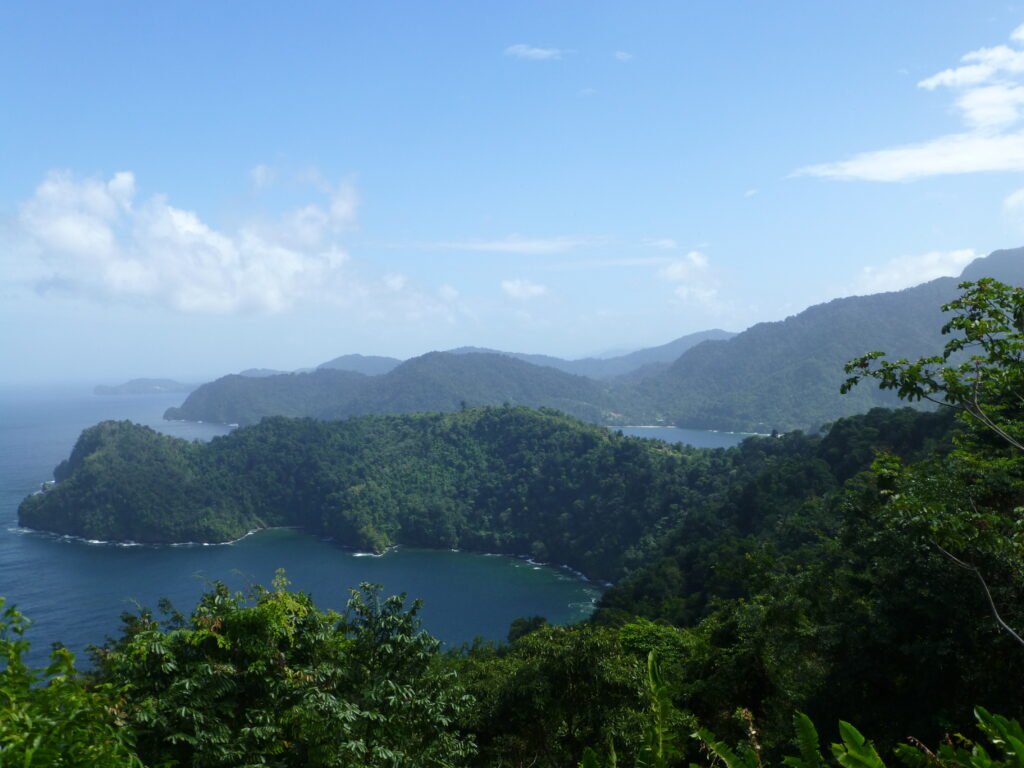
Oil and natural gas, not tourism, drive Trinidad and Tobago’s economy, and most vacationers head for Tobago, the smaller island. Trinidad draws visitors for Carnival, the scarlet ibis roost in the Caroni Swamp, and the beaches of its north coast. English is the official language, and the country stays on Atlantic Standard Time all year.
We put this guide together on October 16, 2026, from the CDC’s Trinidad and Tobago page (reviewed August 25, 2026), the French foreign ministry’s detailed advisory (updated September 15, 2026), World Meteorological Organization climate normals for Piarco, and Wikipedia for visa rules and natural sites. Safety comes first here: a nationwide state of emergency is in force.
Advised Traveler is free to use. If you find our content useful, you can support us by booking through our affiliate links: we earn a commission at no extra cost to you.
- Is Trinidad safe?
- Visa and passport
- Best time to visit
- Where to go
- Beaches and swimming
- Getting around
- Health and insurance
- Money and phone
- Where to stay
- FAQ
- Sources
Is Trinidad and Tobago safe to visit? The state of emergency and the areas to avoid
Check the State Department’s advisory level for Trinidad and Tobago before you book. On the ground, a state of emergency covers the whole country, Tobago included. It ran through all of 2025, was briefly lifted for Carnival, and was reimposed on March 3, 2026. Police can stop, search, and detain people and vehicles on suspicion alone.
The French foreign ministry ties most of the violence to gang conflict and domestic violence, and says it rarely touches visitors who keep to a few rules: stay out of the high-risk neighborhoods, avoid traveling after dark, and don’t go off alone. Its map singles out these areas:
- Port of Spain, day and night: Laventille, Morvant, Beetham, and Sealots, on the hills east of downtown. Elsewhere in the capital, get around by car once it’s dark, and stay out of downtown around Independence Avenue and Charlotte Street at night.
- Also flagged in the capital: the Fort George lookout and the inside of the Queen’s Park Savannah, at any hour.
- Rest of Trinidad: Rio Claro and Sangre Grande; Tunapuna, Curepe, Chaguanas, and San Juan near the capital; and the whole south coast, from Cedros and Point Fortin to Guayaguayare.
- Tobago: the busy tourist strip from Pigeon Point to Mount Irvine is described as safe and well policed; quieter parts of the island call for more care, especially at night.
Leave the camo at home: wearing camouflage clothing is illegal in Trinidad and Tobago, for children too. Skip ATMs after dark, carry little cash, and keep your passport and tickets in the hotel safe.
Do U.S. citizens need a visa for Trinidad and Tobago?
No. U.S. citizens can visit without a visa for up to 90 days, according to Wikipedia’s summary of the country’s visa policy, which cites the IATA Timatic database. Confirm passport validity rules for Americans on the State Department’s country page before you fly.
For French travelers, the French advisory lists a passport valid at least six months, a return ticket, and a hotel reservation. Having all three on hand at Piarco is a sensible precaution whatever your nationality.
Where the sources disagree, yellow fever: the CDC says no vaccination certificate is required to enter. The French advisory says one is required of travelers arriving from Suriname, Ecuador, Peru, Brazil, or Panama. If your trip starts in South America, carry the certificate.
Best time to visit Trinidad and Tobago: January to April
Temperatures barely move. At Piarco, Port of Spain’s airport, average highs stay between 88 and 91°F every month. Rain is what changes: February through April each get about 2 inches or less, while June through August bring 9 to 10 inches, spread over 18 or 19 rainy days.
- Jan 3.1 in
- Feb 1.9 in
- Mar 1.6 in
- Apr 2.0 in
- May 4.3 in
- Jun 9.6 in
- Jul 9.0 in
- Aug 10.1 in
- Sep 7.1 in
- Oct 7.6 in
- Nov 8.8 in
- Dec 5.9 in
Piarco (Port of Spain airport), average monthly rainfall, World Meteorological Organization 1991-2020 normals. Yellow: under 4 in. Light blue: 4 to 8 in. Dark blue: over 8 in.
| Piarco | Low / high | Rain (days) |
|---|---|---|
| Jan | 72 / 88°F | 3.1 in (11) |
| Feb | 72 / 88°F | 1.9 in (8) |
| Mar | 73 / 90°F | 1.6 in (6) |
| Apr | 74 / 91°F | 2.0 in (6) |
| May | 76 / 91°F | 4.3 in (11) |
| Jun | 76 / 89°F | 9.6 in (19) |
| Jul | 75 / 90°F | 9.0 in (19) |
| Aug | 75 / 91°F | 10.1 in (18) |
| Sep | 75 / 91°F | 7.1 in (15) |
| Oct | 75 / 91°F | 7.6 in (15) |
| Nov | 74 / 89°F | 8.8 in (17) |
| Dec | 73 / 88°F | 5.9 in (15) |
Hurricane season runs June through November, but the islands sit far enough south that storms rarely hit. Heavy rain is the more common problem, with landslides on mountain roads and flooding in the lowlands.
Carnival 2027: the street parade falls on the Monday and Tuesday before Ash Wednesday, which puts it on February 8 and 9, 2027, in the heart of the dry season. Fetes start well before parade day, so book flights and rooms early.
Things to do in Trinidad and Tobago: six areas worth the trip
The country has no UNESCO World Heritage Sites, but it does have two wetlands protected under the Ramsar Convention and one of the oldest forest reserves anywhere. For hikes in Trinidad’s interior, where trails are poorly marked, the French advisory recommends hiring a guide.
Port of Spain
The capital is the country’s cultural and financial center, home to the Red House, where Parliament sits, and Independence Square. The mansions known as the Magnificent Seven line the area near the Queen’s Park Savannah. Our guide: Port of Spain.
Maracas Bay and the north coast
Maracas Bay is one of Trinidad’s best-known beaches, and the French advisory counts it among the low-risk spots for swimming. Expect narrow, winding mountain roads on the way there.
Caroni Swamp
Where the Caroni River meets the Gulf of Paria, south of the capital, lies the country’s largest mangrove forest, a Ramsar wetland. Its bird sanctuary is the main roost of the scarlet ibis, one of the national birds, and more than 100 other bird species live there. Visitors tour the channels by boat.
The east coast: Manzanilla and nesting leatherbacks
Manzanilla Beach runs along the Atlantic side of Trinidad; Spanish settlers named it after the manchineel trees they mistook for apple trees. Farther north, the village of Grande Riviere is known for nesting leatherback turtles and a community-run ecotourism program. Swimming on this coast is strongly discouraged (see below).
The south: Pitch Lake and San Fernando
At La Brea, Pitch Lake is the world’s largest natural deposit of asphalt, about 10 million tons spread over roughly 100 acres, crossed on foot with official guides from a small museum. San Fernando is the main city of the south.
La Brea is on the southwest coast, which the French advisory says to avoid without a compelling reason, and the highway between Port of Spain and San Fernando sees frequent serious crashes. A driver or an organized tour is the safer way to go.
Tobago: Pigeon Point, Buccoo Reef, and the Main Ridge
Tobago’s southwest is flat coral limestone, and its Pigeon Point to Mount Irvine stretch is the area the French advisory rates safest. Buccoo Reef, a marine park since 1973 and a Ramsar site since 2005, is shallow enough to snorkel without dive gear. Up in the hills, the Main Ridge Forest Reserve, legally protected since 1776, is a favorite of birders. Scarborough is the island’s main town.
A sunset boat ride through the Caroni Swamp, a snorkel trip over Buccoo Reef, or a guided rainforest walk: the button below opens our partner GetYourGuide’s listings for Trinidad and Tobago. For anything in the backcountry, the French advisory suggests sticking with established operators and local guides.
See all Trinidad and Tobago tours and activities on GetYourGuide
Beaches: where to swim, and why to stay out of the water on the east coast
Strong currents run along both islands. The French advisory rates Maracas Bay, the “Down the Islands” area off Trinidad, and the waters around Pigeon Point on Tobago as low risk. The three big beaches of Trinidad’s east coast, Manzanilla among them, and part of the north coast have dangerous currents, and swimming there is banned.
Manchineel trees: several beaches are lined with them. The bark, the sap, and the small apple-like fruit are highly toxic, so don’t touch the tree or shelter under it.
The east coast also gets green seaweed and stinging jellyfish. Even on popular beaches, protected swimming areas are often poorly marked, so ask locally before you go in, and don’t head to an empty beach on your own.
Getting around: licensed taxis, left-hand driving, and flights to Tobago
Licensed taxis carry license plates starting with the letter H; the French advisory suggests picking them up near the big hotels and using only taxis after dark. Tobago is linked to Trinidad by domestic flights into A.N.R. Robinson International Airport.
- Driving: traffic keeps to the left. Road quality is very uneven, and the mountain roads of northern Trinidad and Tobago are narrow and winding; a taxi or a car with a driver is the advisory’s preferred option.
- Gas: easy to find by day everywhere and at night in Port of Spain, but scarce or unavailable at night elsewhere. Fill up before you leave the capital.
- After a fender bender: with a rental car, wait for the police, who decide who is at fault.
Vaccines, mosquitoes, and travel insurance
The CDC asks all international travelers to be fully vaccinated against measles. For Trinidad and Tobago it recommends hepatitis A for unvaccinated travelers age 1 and older, hepatitis B for unvaccinated travelers under 60, and typhoid for longer stays or visits to friends and family. Yellow fever vaccine is recommended from 9 months of age for densely forested areas of Trinidad, not for trips limited to Tobago.
Dengue and Zika are spread by mosquitoes, so use repellent. Leptospirosis comes from contaminated fresh water and mud: stay out of floodwater. Dogs with rabies are not common, but bats can carry the virus.
Hospital quality varies, private clinics are better but expensive, and a serious case may mean evacuation to Miami or the French Caribbean. Our partner SafetyWing Nomad Insurance lists up to $250,000 in medical coverage and a $100,000 lifetime maximum for medical evacuation; its quote page tells you if you are eligible. Readers based in Europe can compare Chapka Cap Assistance.
SafetyWing code: new SafetyWing customers can enter ADVISEDTRAVELER to get the Electronics Theft add-on free for 8 weeks on a Nomad Essential plan billed every 28 days or yearly. Click the pink camera icon on the Nomad Insurance page and add the code before creating your account. The add-on then renews as a paid option.
Money and phone: Trinidad and Tobago dollars and an eSIM
The currency is the Trinidad and Tobago dollar (TTD). Cards are widely used and ATMs are plentiful, so there’s no need to carry much cash.
Before you land, ask your carrier what its international plan costs per day. To pay for data up front instead, our partner Yesim sells a Trinidad and Tobago eSIM you can set up at home on an unlocked, eSIM-compatible phone.
Where to stay: Port of Spain for Trinidad, the southwest tip for Tobago
The French advisory favors guarded hotels and gated residences, and suggests not staying in the Carenage area. On Tobago, the Pigeon Point to Mount Irvine strip is the area it considers safest. The map opens on Port of Spain; type Tobago or another town into its search box to move it.
Browse places to stay in Trinidad and Tobago, with recent prices and reviews
Trinidad and Tobago travel FAQ
Do I need a visa to travel to Trinidad and Tobago?
Not as a U.S. citizen on a trip of up to 90 days. Check the State Department’s page for passport validity, and travel with a return ticket and proof of where you are staying.
Is Trinidad safe to visit?
Crime is high and a state of emergency is in effect, but the violence is concentrated in specific neighborhoods. Avoiding those areas, nighttime travel, and isolated spots cuts the risk considerably.
Is Tobago safe?
The state of emergency covers Tobago too. The tourist area from Pigeon Point to Mount Irvine is considered safe and well policed; elsewhere on the island, take extra care at night.
What is the best time to visit Trinidad and Tobago?
January through April, the driest stretch, with 1.6 to 3.1 inches of rain a month at Piarco. Carnival usually lands in February.
Can you swim at Manzanilla Beach?
It is strongly discouraged: the whole east coast has rip currents that have caused drownings, plus jellyfish and seaweed. Maracas Bay or the beaches around Pigeon Point are safer choices.
What time zone is Trinidad and Tobago in?
Atlantic Standard Time (UTC-4) all year. That matches New York during daylight saving time and is one hour ahead of New York in winter.
Sources
Checked on October 16, 2026.
- Centers for Disease Control and Prevention, Trinidad and Tobago, Traveler View (reviewed August 25, 2026).
- French Ministry for Europe and Foreign Affairs, Trinidad and Tobago advisory (in French, updated September 15, 2026): Security (risk zones updated March 13, 2026), Entry, Health, Practical information.
- World Meteorological Organization, 1991-2020 climate normals for Piarco (file hosted by NOAA), converted and rounded.
- Wikipedia: Visa policy of Trinidad and Tobago, Trinidad and Tobago (currency, time zone, driving side), Port of Spain, Tobago, Main Ridge, Buccoo Reef, Caroni Swamp, Pitch Lake, Manzanilla Beach, Grande Riviere, Trinidad and Tobago Carnival.
- SafetyWing, Nomad Insurance (coverage limits).
Researched and written by the Advised Traveler team from the sources above, without a visit of our own. Risk zones and the state of emergency can change quickly, so reread the official advisories shortly before you leave. Found a mistake? Tell us.