
Is Montevideo Worth Visiting? Old Town Sights, the Rambla, Carnival and Safety Tips
What Montevideo’s city government says about its landmarks and beaches, when Carnival and the candombe drum parades happen, and which areas foreign governments flag after dark.
- 14 miles from Carrasco airport to downtown
- 1856: opening night at the Teatro Solís
- 60,000 seats at the 1930 Estadio Centenario
- 911 for emergencies
Uruguay’s capital sits on the Río de la Plata. Most first-time visitors split their time between the Ciudad Vieja, the old walled town on its peninsula, and the Rambla, the waterfront promenade that runs east past the city beaches.
We built this guide from the Intendencia de Montevideo’s own visitor guides, UNESCO, and the travel advice published by Canada and Belgium.
Advised Traveler is free to use. If you find our content useful, you can support us by booking through our affiliate links: we earn a commission at no extra cost to you.
- Is it worth it?
- Old Town highlights
- Rambla and beaches
- Cerro, Prado and the stadium
- Best time to visit
- Safety
- Getting there
- Before you go
- Where to stay
- FAQ
- Sources
Is Montevideo worth visiting, and for how long?
If you like walkable historic districts, theater, football history and a long city waterfront, yes. The Old Town landmarks fit into one day on foot. A second day lets you add the Rambla beaches, the Prado park or the Cerro fortress, and a Sunday stay adds the Tristán Narvaja street market and the candombe drums.
Top things to see in the Ciudad Vieja
The city walls went up around 1741 and came down in 1829. One gate survives, and most of the sights below are a few blocks from it.
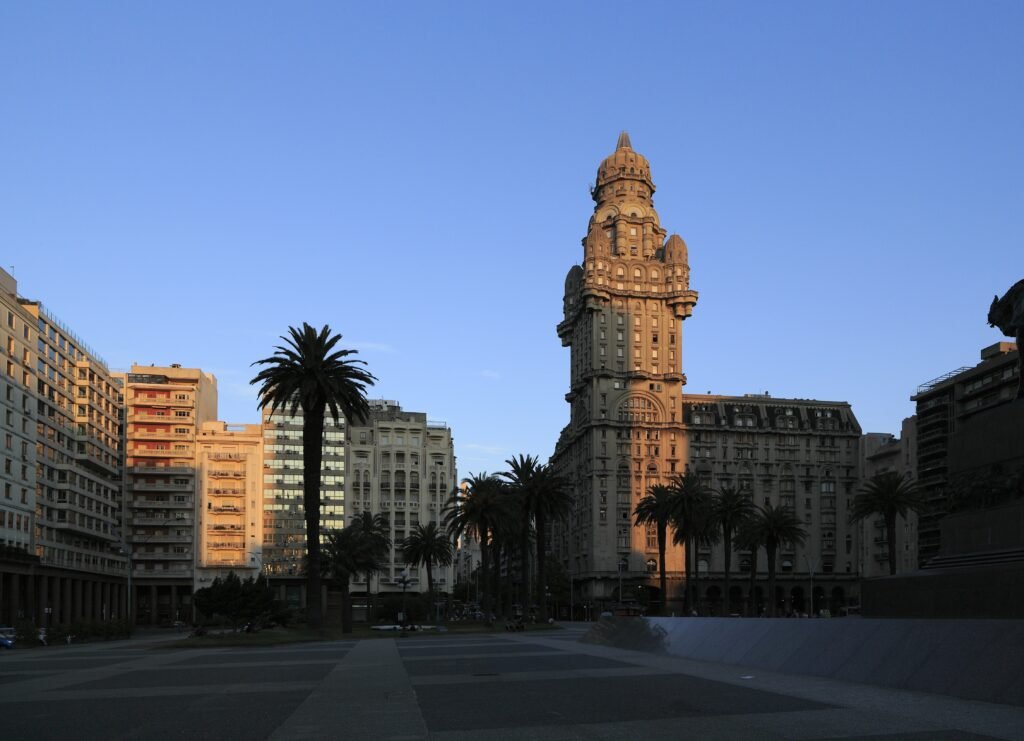
- Plaza Independencia: the square where Avenida 18 de Julio begins, built around the Artigas monument and mausoleum. The Teatro Solís, Palacio Salvo, Palacio Estévez and Torre Ejecutiva line its edges.
- Puerta de la Ciudadela: the old fortress gate, where you can still see the marks of the drawbridge chains.
- Palacio Salvo: the tower that dominates the square, dated 1922 in the city guide’s timeline.
- Teatro Solís: its first official performance was Verdi’s Ernani on August 25, 1856. The city bought it in 1937; it closed after a fire in November 1998 and reopened on August 25, 2004.
- Mercado del Puerto: a market hall opened in 1868 under an iron frame made in Liverpool, now filled with parrillas (grill restaurants).
Theater tours: the Solís runs five guided-tour formats in several languages. Tickets are sold at the box office and through Tickantel.
Prefer a guide? These walking tours come from our partner GetYourGuide. Check the meeting point before booking: cruise passengers land at the port, at the western edge of the Old Town.
See all Montevideo tours and activities on GetYourGuide
The Rambla and Montevideo’s city beaches
The waterfront promenade is somewhere between 16 and 19 miles long, depending on which city publication you read: the 2024 visitor guide says 25 km, while an older guide and the cruise leaflet say close to 30 km.
- East of downtown: Ramírez, Pocitos, Buceo, Malvín, Playa Honda, Los Ingleses, Playa Verde, Carlos Gardel and Carrasco.
- West of the bay: Punta Espinillo, La Colorada, Pajas Blancas, Zabala, Punta Yeguas, Santa Catalina, Playa Nacional and Playa del Cerro.
- Accessibility: the city lists a universal-access beach at República del Perú and Manuel Vicente Pagola.
The city says its beaches have lifeguards and are managed under the ISO 14001 environmental standard. Ask at the beach post for the dates of the lifeguard season.
Beyond downtown: Cerro, Prado and the Estadio Centenario
- Cerro de Montevideo: a 443-foot hill across the bay, topped by the Fortaleza General Artigas (completed in 1811), a lighthouse and a military history museum.
- Prado: a park of about 262 acres with the Juana de Ibarbourou rose garden, the botanical garden, a Japanese garden and the Blanes art museum.
- Estadio Centenario: opened on July 18, 1930, with 60,000 seats and the Football Museum under the Olympic stand. The undated city guide lists weekday visits from 10 a.m. to 5 p.m., so call ahead.
- Sunday market: the Tristán Narvaja street fair runs Sunday mornings between Avenida 18 de Julio and Calle La Paz.
When is the best time to visit Montevideo?
Late January through February is the time to go if you want Carnival: it opens with a parade on the last Thursday of January and runs into March, and the Llamadas drum parades fill Barrio Sur and Palermo on the first Thursday and Friday of February. The city markets itself as a year-round destination outside that window.
Seasons are reversed from North America, so summer runs from December to March. Belgium’s foreign ministry reports no particular weather hazards in Uruguay.
Candombe year-round: UNESCO, which listed candombe as intangible heritage in 2009, says the drum calls go out every Sunday and on many holidays in the Sur, Palermo and Cordón neighborhoods. The city guide adds a drum gathering on January 6.
Is Montevideo safe for tourists?
Canada asks travelers to exercise a high degree of caution in Montevideo, compared with normal precautions for the rest of Uruguay (advice updated October 13, 2026). It reports more pickpocketing, muggings and armed robbery along Avenida 18 de Julio, in the Ciudad Vieja, on Plaza Independencia and around the port.
Belgium’s advice (July 23, 2026) is to avoid walking in the Old Town, the port area and outlying working-class districts at night. It calls Pocitos and Carrasco safer, though not crime-free. For the U.S. advisory level, check the State Department’s Uruguay page at travel.state.gov before you book.
Street smarts: keep your phone and jewelry out of sight, use ATMs inside banks or stores, and hand over valuables rather than resist. Canada also warns about thieves working in pairs on motorcycles. Police: 911.
Getting there and getting around
Carrasco International Airport is about 14 miles from downtown on Route 101. Plan on a taxi or a rental car and agree on the fare first.
Long-distance buses leave from the Tres Cruces terminal at Bulevar Artigas and Avenida Italia, with routes to Argentina, Brazil, Paraguay and Bolivia listed in the city guide. We also have a guide to the beach resort of Punta del Este.
Before you go: entry, tax breaks, money and data
- Entry: rules depend on your passport. Uruguay’s foreign ministry points travelers to the visa list of its National Migration Directorate; U.S. citizens should also read the State Department’s country page.
- Tax breaks: Uruguay’s foreign ministry (page dated July 18, 2025) says non-resident tourists get 0% VAT on accommodation and a 9-point VAT refund on some purchases and services. Uruguay Natural, the national tourism board, has the conditions.
- Money: the currency is the Uruguayan peso (UYU); some shops take U.S. dollars and Argentine pesos.
- Health: Belgium says tap water is safe to drink; Canada notes sporadic dengue.
- Cannabis: only registered residents can buy it legally. Canada warns that purchase is illegal for tourists.
Belgium recommends travel insurance that covers medical care, hospitalization and repatriation. SafetyWing Nomad Insurance is one option to compare; check the plan page for eligibility and exclusions. Readers living in Europe can also look at Chapka Cap Assistance. For mobile data without roaming charges from your carrier, a Yesim eSIM for Uruguay can be set up before you fly.
Where to stay in Montevideo: Pocitos, Carrasco or the Old Town
Pocitos puts you on the Rambla within walking distance of the beach, and Belgium lists it among the safer areas. Carrasco, farther east, is the closest neighborhood to the airport. Staying in the Ciudad Vieja keeps the landmarks on your doorstep, but given the warnings above, plan on a cab back at night.
Check current prices and reviews for Montevideo hotels
Montevideo FAQ
How many days do you need in Montevideo?
One day covers the Old Town on foot; two days leave time for the Rambla, the Prado or the Cerro.
What are the main tourist attractions in Montevideo?
Plaza Independencia, the Puerta de la Ciudadela, the Teatro Solís, the Mercado del Puerto, the Rambla beaches and the Estadio Centenario with its Football Museum.
Which parts of Montevideo should you avoid at night?
Belgium advises against walking at night in the Ciudad Vieja, around the port and in outlying working-class districts.
When is Carnival in Montevideo?
From the opening parade on the last Thursday of January into March, with the Llamadas on the first Thursday and Friday of February.
Can you drink the tap water in Montevideo?
Yes. Belgium’s foreign ministry says tap water in Uruguay is drinkable.
Sources
All checked on November 12, 2026.
- Intendencia de Montevideo, Tourist Guide (PDF, 2024), Montevideo guide (PDF, undated) and cruise destination leaflet (PDF, Spanish).
- Intendencia de Montevideo, Teatro Solís institutional overview (PDF, Spanish).
- UNESCO, Candombe and its socio-cultural space (inscribed 2009).
- Government of Canada, Travel advice for Uruguay (updated October 13, 2026, French version).
- Belgian Federal Public Service Foreign Affairs, general security, health and climate and disasters (July 23, 2026, French).
- Uruguay Ministry of Foreign Affairs, entry requirements and tourist benefits (July 18, 2025) and visa rules by country (Spanish).
Compiled by the Advised Traveler team from the official sources above; we have not stayed in Montevideo. Spotted a changed date or opening time? Let us know.