
Portugal Travel Guide: Entry Rules for Americans, Best Time to Go, Seven Regions, and Driving Tips
What a U.S. passport needs at the border, when Lisbon dries out, how the country splits from the Douro to the Azores, and the toll and cash rules that catch drivers off guard.
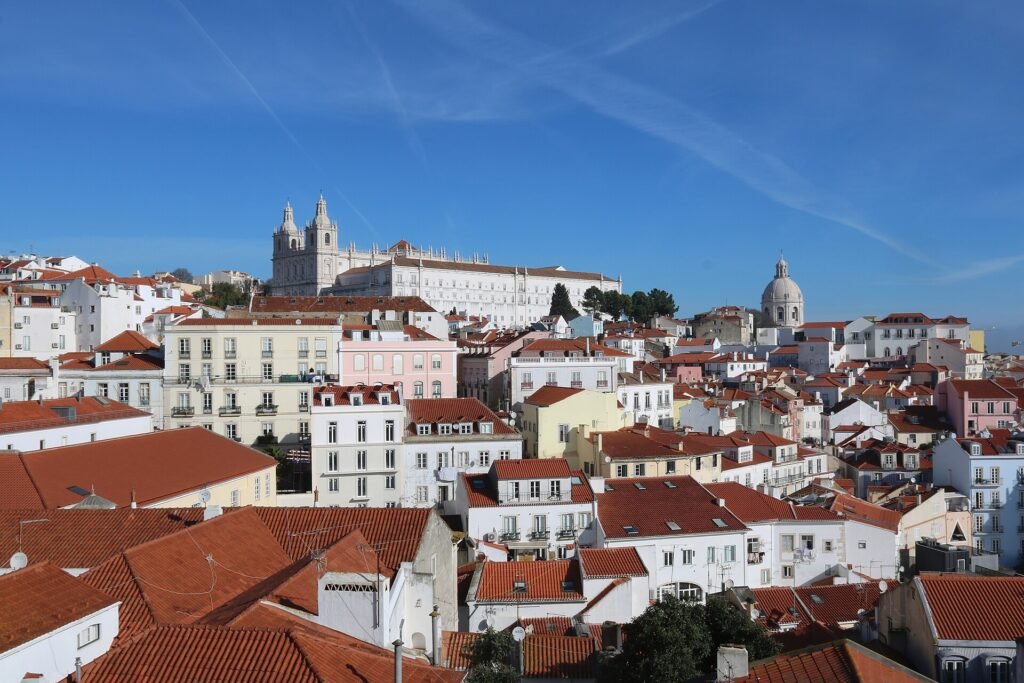
- 90 days visa-free in any 180 across Schengen
- 0.1 in of rain in a normal Lisbon July
- 17 UNESCO World Heritage listings
- 5 hours ahead of New York most of the year
Portugal uses the euro and belongs to both the European Union and the Schengen Area, so the rules you meet at Lisbon or Porto airport are the same ones that apply in Spain, France, or Italy. Mainland Portugal and Madeira keep the same clock as London; the Azores run an hour behind.
We built this page from Portugal’s Ministry of Foreign Affairs visa list, the EU’s Your Europe portal, the CDC’s Portugal page (reviewed August 25, 2026), climate normals from Portugal’s national weather institute (IPMA), and the French foreign ministry’s detailed advisory. Everything was checked on October 16, 2026, and the safety, UNESCO, time zone, and currency sources again on October 22, 2026. It also links to our 20 city guides for Portugal.
Advised Traveler is free to use. If you find our content useful, you can support us by booking through our affiliate links: we earn a commission at no extra cost to you.
- Passport and visa rules
- Best time to visit
- Seven regions to visit
- Euros, cards, and cash
- Driving and tolls
- Safety
- Health and insurance
- Phone and eSIM
- Where to stay
- FAQ
- Sources
Do U.S. citizens need a visa for Portugal?
No, not for a short stay. Portugal’s Ministry of Foreign Affairs lists the United States among the countries whose citizens are exempt from the Schengen short-stay visa. Under EU rules, that exemption covers up to 90 days in any 180-day period, counted across every Schengen country together, not per country.
- Passport validity: the EU asks that your passport be valid at least 3 months beyond the day you plan to leave the Schengen Area, and that it was issued within the previous 10 years.
- Biometric registration: the EU’s Entry/Exit System has been fully operational since April 10, 2026. On your first crossing, border officers record your passport data, fingerprints, and a facial image instead of stamping your passport, so allow extra time at the airport.
- Connecting onward: if Lisbon is only a stop on your way to Brazil, Cabo Verde, or Senegal, check that destination’s own passport rules before you fly.
Pack carefully: Portuguese law bans pepper spray and other defense sprays, batons, stun guns, and knives with a blade longer than 10 cm (about 4 inches). Offenders face confiscation and a heavy fine, per the French advisory.
Best time to visit Portugal: a dry summer and a wet late fall
Lisbon is close to rainless in July and August, with highs of 83 to 84°F. Rain returns in October and peaks in November at about 5.3 inches. For sightseeing on foot, May and September split the difference, with highs near 74 and 80°F and little rain in September.
- Jan 4.1 in
- Feb 3.1 in
- Mar 2.7 in
- Apr 2.8 in
- May 2.3 in
- Jun 0.6 in
- Jul 0.1 in
- Aug 0.2 in
- Sep 1.5 in
- Oct 4.4 in
- Nov 5.3 in
- Dec 4.3 in
Lisbon (Instituto Geofísico station), average monthly rainfall, IPMA 1991-2020 normals. Yellow: under 2 in. Light blue: 2 to 4 in. Dark blue: over 4 in.
| Lisbon | Low / high | Rain |
|---|---|---|
| Jan | 47 / 59°F | 4.1 in |
| Feb | 48 / 62°F | 3.1 in |
| Mar | 52 / 66°F | 2.7 in |
| Apr | 54 / 69°F | 2.8 in |
| May | 58 / 74°F | 2.3 in |
| Jun | 62 / 79°F | 0.6 in |
| Jul | 65 / 83°F | 0.1 in |
| Aug | 66 / 84°F | 0.2 in |
| Sep | 64 / 80°F | 1.5 in |
| Oct | 60 / 73°F | 4.4 in |
| Nov | 53 / 65°F | 5.3 in |
| Dec | 49 / 60°F | 4.3 in |
The north is much wetter and cooler. IPMA’s normals give Porto’s airport about 45 inches of rain a year, against 31 inches in Lisbon and 18 inches in Faro, and a July high of 76°F in Porto versus 85°F in Faro. All figures are IPMA 1991-2020 normals, converted and rounded.
Where to go in Portugal: seven regions and our city guides
Portugal has 17 entries on the UNESCO World Heritage List. Here they are grouped with our city guides, from Lisbon outward. We are rewriting those guides one by one over the coming weeks.
Lisbon, Sintra, and Cascais
Lisbon’s Jerónimos Monastery and Belém Tower have been World Heritage Sites since 1983. West of the capital, the Cultural Landscape of Sintra has been listed since 1995, and the seaside town of Cascais pairs easily with it. The palace-convent of Mafra, north of Lisbon, was added in 2019.
Our guides: things to do in Lisbon, Sintra, and Cascais.
Porto and the North
Porto’s historic center, the Luís I Bridge, and the Serra do Pilar monastery were listed in 1996; the terraced vineyards of the Alto Douro wine region followed in 2001. Farther north, the historic center of Guimarães was listed in 2001, and Braga’s Sanctuary of Bom Jesus do Monte in 2019.
Our guides: Porto, Braga, Guimarães, Viana do Castelo, and Bragança.
Coimbra and Central Portugal
The University of Coimbra, with its Alta and Sofia quarters, joined the World Heritage List in 2013. Between Coimbra and Lisbon, the monasteries of Batalha and Alcobaça and the Convent of Christ in Tomar were listed in the 1980s. The French advisory flags the narrow wall walk around Óbidos as a spot to watch your footing.
Évora and the Alentejo
Évora’s historic center has been listed since 1986, and the border garrison town of Elvas and its fortifications since 2012. The hilltop village of Monsaraz looks east over the plain toward Spain. Our guides: Évora and Monsaraz.
The Algarve
The south coast is the driest of the three weather stations above, with about 18 inches of rain a year in Faro. Faro and Tavira sit on the eastern stretch; Lagos and Sagres lie toward Cape St. Vincent in the west.
Madeira
Madeira’s laurel forest, the Laurisilva, has been a natural World Heritage Site since 1999. Many of the island’s walks follow levadas, old irrigation channels, along steep drops; the French advisory strongly recommends a qualified local guide on those trails. Our guide: Funchal.
The Azores
On Terceira, the central zone of Angra do Heroísmo was listed in 1983, and the vineyard landscape of Pico Island followed in 2004. Remember to set your watch back an hour from Lisbon. Our guides: Ponta Delgada and Angra do Heroísmo.
A Douro River cruise from Porto, a day in Sintra from Lisbon, or a guided levada walk on Madeira: the button below opens our partner GetYourGuide’s listings for Portugal. For boat trips and coastal outings, read the cancellation terms first, since rough Atlantic weather can scrub them.
See all Portugal tours and activities on GetYourGuide
Portugal currency: euros, and why you still want cash
Portugal uses the euro. The French advisory still recommends carrying some cash for everyday spending, because foreign cards are not accepted everywhere. Use ATMs inside bank branches when you can, and keep your card in sight when a restaurant or shop runs it.
Driving in Portugal: electronic tolls and on-the-spot fines
Many highways have no toll booths. A sign reading “Electronic toll only” means cameras photograph your plate and bill the car. With a rental car registered in Portugal, either ask the rental company for an electronic toll device (the tolls are added to your bill when you return the car), or pay at a CTT post office with the plate number, starting the second day after you drove through and within five working days.
- Speed limits: 120 km/h (75 mph) on highways, 100 km/h (62 mph) on expressways, 90 km/h (56 mph) on other roads, 50 km/h (31 mph) in towns.
- Alcohol: the legal limit is 0.5 g/l of blood, and driving under the influence of any substance that impairs driving is banned.
- Fines: visitors pay traffic and parking fines on the spot, in cash, against a receipt; Visa and Mastercard are not accepted. If you cannot pay, police can hold the car or its papers.
- After a crash: stay at the scene and leave the vehicles where they are until police arrive.
Is Portugal safe? Pickpockets, wildfires, and the Atlantic
The State Department rates Portugal Level 1, Exercise Normal Precautions (advisory updated December 23, 2025), and warns about petty theft in crowded tourist areas and on public transportation. The French foreign ministry places the whole country at its lowest alert level and calls it generally safe, while reporting a sharp rise in pickpocketing in tourist areas and on public transportation, especially Lisbon’s metro and the number 25 and 28 trams.
June 1 to September 30: fires of any kind, including campfires, barbecues, and cigarettes, are banned in forest areas, and smoking is banned on roads through them. Fines run up to 300 euros, with harsher penalties if a wildfire starts.
The ocean stays cold because of currents, and some beaches are dangerous for swimmers and surfers. Swimming under a red flag, or going beyond wading under a yellow one, can bring a fine of up to 250 euros. Stay away from the shoreline in storms, above all at Nazaré. Portugal also sits in an earthquake zone, with the highest risk around Lisbon, in the south, and in the Azores.
Vaccines and travel insurance for Portugal
The CDC asks every international traveler to be fully vaccinated against measles. It suggests most travelers consider hepatitis A, and recommends hepatitis B for unvaccinated travelers under 60. Rabid dogs are not commonly found in Portugal, it adds, and rabies shots are typically available after an exposure.
The CDC also tells travelers to check what their own health plan covers abroad and to consider travel medical and evacuation insurance. Our partner SafetyWing Nomad Insurance lists up to $250,000 in medical coverage and a $100,000 lifetime maximum for medical evacuation; its quote page shows whether you qualify. Readers living in Europe can look at Chapka Cap Assistance.
SafetyWing code: if you have never had a SafetyWing account, the code ADVISEDTRAVELER adds the Electronics Theft option free for 8 weeks on a Nomad Essential plan billed every 28 days or yearly. Click the pink camera on the Nomad Insurance page and enter the code before you create your account. After 8 weeks the option renews as a paid add-on.
Using your U.S. phone in Portugal
Ask your carrier what its international plan costs per day or per month before you land. If you would rather pay up front for data, our partner Yesim sells a Portugal eSIM you can install at home; your phone has to be unlocked and eSIM-compatible.
Where to stay in Portugal
Lisbon and Porto both work as bases for day trips, to Sintra in one case and the Douro or Guimarães in the other, while Faro or Lagos covers the Algarve. The map opens on Lisbon; type another town in its search box to move it.
Compare places to stay in Portugal, with recent prices and reviews
Vacation rentals: hosts must report guests’ identity and stay dates to Portuguese authorities, but data protection law does not let them copy your passport without your consent. The French advisory suggests checking that the rental company is reputable.
Portugal travel FAQ
How long can Americans stay in Portugal without a visa?
Up to 90 days in any 180-day period, and that count includes time spent in every other Schengen country on the same trip.
How many months must my passport be valid for Portugal?
At least 3 months past the date you plan to leave the Schengen Area, and it must have been issued within the last 10 years.
What is the best month to visit Portugal?
For dry weather, June through September; for city walking with fewer hot afternoons, May or September. The north gets far more rain than Lisbon or the Algarve.
Do they use dollars in Portugal?
No, the currency is the euro. Carry some euros in cash, since foreign cards are not taken everywhere and traffic fines are paid in cash.
What is the time difference between Portugal and the U.S.?
Mainland Portugal is 5 hours ahead of New York and 8 hours ahead of Los Angeles for most of the year. The Azores are one hour behind the mainland.
Sources
Checked on October 16, 2026, and October 22, 2026.
- Portuguese Ministry of Foreign Affairs, Who needs a visa (Schengen short stays).
- European Union, Your Europe: Travel documents for non-EU nationals; European Commission, Entry/Exit System.
- Centers for Disease Control and Prevention, Portugal, Traveler View (reviewed August 25, 2026).
- IPMA (Portuguese Institute for Sea and Atmosphere), 1991-2020 climate normals, in Portuguese: Lisbon, Porto airport, Faro.
- French Ministry for Europe and Foreign Affairs, Portugal advisory (in French, updated September 15, 2026): Entry, Security, Practical information.
- U.S. Department of State, Portugal Travel Advisory (updated December 23, 2025), checked October 22, 2026.
- UNESCO World Heritage Centre, Portugal’s properties (17), checked October 22, 2026.
- IPMA, legal time in Portugal (mainland, Madeira, and the Azores; in Portuguese), and European Commission, Portugal and the euro, checked October 22, 2026.
- SafetyWing, Nomad Insurance (coverage limits).
Researched and written by the Advised Traveler team from the official sources above, not from a trip of our own. Toll and beach rules change, so recheck before you drive or swim. Spot an error? Let us know.