
Porto, Portugal Travel Guide: A 3-Day Itinerary, Top Sights, Beaches and Where to Stay
How to split three days between both banks of the Douro, what UNESCO protects, monthly weather in °F and inches, the closest beaches, the city tourist tax and entry rules for U.S. passport holders.
- 1996 UNESCO World Heritage listing
- 126 acres of protected old town
- 45 in of rain a year
- €3 city tax per night
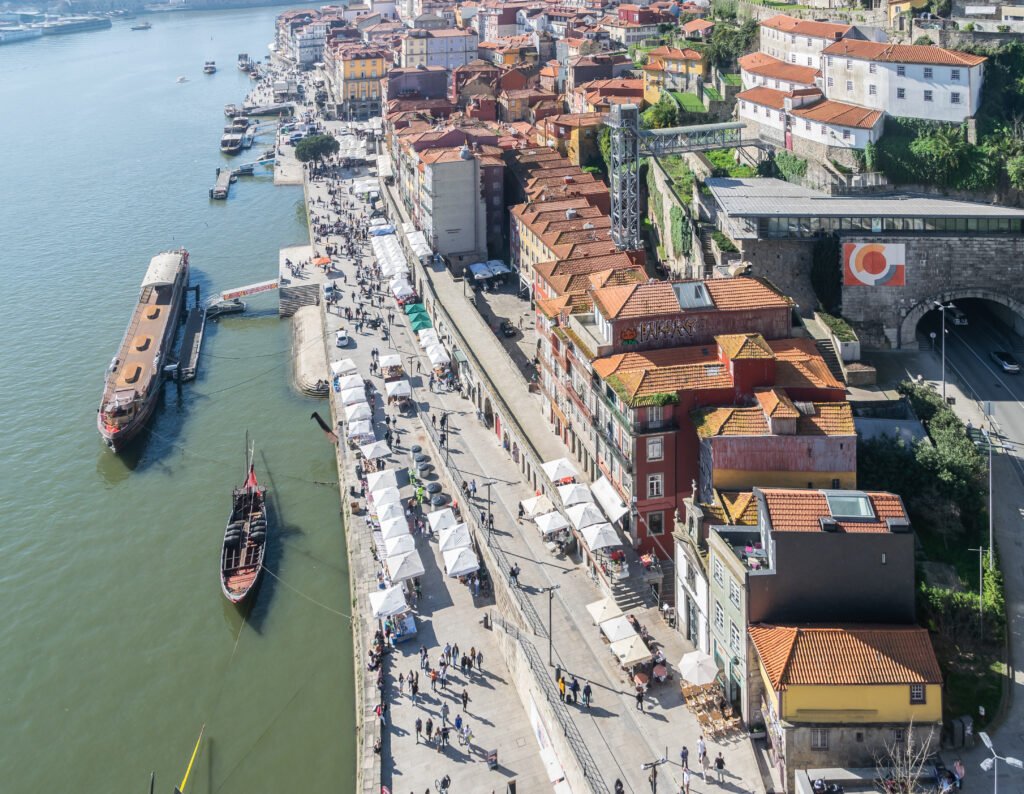
Porto rewards a short stay: its UNESCO-listed core covers about 126 acres on the north bank of the Douro River, and the Luiz I Bridge carries you across to Vila Nova de Gaia and the hilltop Monastery of Serra do Pilar. Three days is enough to see both banks and add either the Atlantic beaches or a day in the Douro Valley wine country.
This guide draws on the UNESCO World Heritage Centre, IPMA (Portugal’s weather service), Porto City Hall and the U.S. State Department. Every source is dated at the bottom of the page.
Advised Traveler is free to use. If you find our content useful, you can support us by booking through our affiliate links: we earn a commission at no extra cost to you.
- 3-day itinerary
- The UNESCO old town
- Weather by month
- Beaches near Porto
- Port wine and the Douro Valley
- Where to stay
- Passport rules and city tax
- FAQ
- Sources
How many days in Porto? A 3-day itinerary
Two full days cover the protected old town on both banks; a third lets you head to the ocean or upriver. Grouping sights by riverbank saves you from crossing the bridge back and forth.
- Day 1, north bank: São Bento station, the cathedral (Sé), then down to the river for the Stock Exchange Palace (Palácio da Bolsa) and the Church of Santa Clara.
- Day 2, south bank: walk the Luiz I Bridge to the Monastery of Serra do Pilar for the view back over the city, then book a port wine tasting.
- Day 3, your pick: the beaches of Matosinhos in summer, or a guided day trip to the terraced vineyards of the Alto Douro.
What to see in Porto: the UNESCO-listed old town
The World Heritage Committee added the Historic Centre of Oporto, Luiz I Bridge and Monastery of Serra do Pilar to its list in 1996, under criterion (iv). The site covers 51 hectares (about 126 acres) inside the Fernandine walls, finished in 1376, with a 186-hectare (460-acre) buffer zone around it.
Landmarks UNESCO singles out include:
- Porto Cathedral (Sé), with a Romanesque core from the 12th century;
- the Stock Exchange Palace (Palácio da Bolsa);
- São Bento railroad station;
- the São João theater and the Church of Santa Clara;
- the Luiz I Bridge and, across the river, the Monastery of Serra do Pilar.
Before you go: the cathedral, the Stock Exchange Palace, Clérigos Tower and the Livraria Lello bookstore each set their own hours and ticket rules, which change with the season. We don’t list them here; check each site’s official ticket page.
Our partner GetYourGuide lists walking tours, Douro River cruises and port tastings in Porto. For a cruise, note the departure pier and whether you get a free cancellation if high water or wind stops the boats.
See all Porto tours and activities on GetYourGuide
Best time to visit Porto: rain and temperatures by month
Pack a rain jacket outside summer. The airport station (Pedras Rubras) averages about 45 inches of rain a year under IPMA’s 1991-2020 normals. June through August get less than 1.5 inches a month, with highs of 73 to 77°F; October through January each top 5.8 inches, and November is the wettest month.
- Jan 5.9 in
- Feb 3.9 in
- Mar 4.0 in
- Apr 3.8 in
- May 3.4 in
- Jun 1.3 in
- Jul 0.7 in
- Aug 1.2 in
- Sep 2.7 in
- Oct 5.9 in
- Nov 6.5 in
- Dec 6.0 in
Average monthly rainfall, Porto / Pedras Rubras station, IPMA 1991-2020 normals. Yellow: under 2 in. Light blue: 2 to 5 in. Dark blue: over 5 in.
| Month | Low / high | Rain (days) |
|---|---|---|
| Jan | 44 / 57 °F | 5.9 in (13) |
| Feb | 44 / 59 °F | 3.9 in (10) |
| Mar | 48 / 63 °F | 4.0 in (10) |
| Apr | 50 / 65 °F | 3.8 in (10) |
| May | 54 / 69 °F | 3.4 in (9) |
| Jun | 58 / 73 °F | 1.3 in (5) |
| Jul | 60 / 76 °F | 0.7 in (3) |
| Aug | 60 / 77 °F | 1.2 in (3) |
| Sep | 59 / 74 °F | 2.7 in (6) |
| Oct | 55 / 69 °F | 5.9 in (11) |
| Nov | 49 / 62 °F | 6.5 in (13) |
| Dec | 46 / 58 °F | 6.0 in (12) |
For mild weather with fewer wet days, May and September are the sweet spots: highs of 69 to 74°F and 6 to 9 days of rain. In January, expect 44 to 57°F and rain on about 13 days.
Beaches near Porto: Matosinhos and Leça da Palmeira
The nearest lifeguarded beaches are in the neighboring town of Matosinhos, including Matosinhos and Leça da Palmeira. The 2026 bathing season ran from June 13 to September 13, and the town holds 19 Blue Flags, Portuguese broadcaster Rádio Renascença reported.
Water quality and flags: in January 2026, Portugal’s environment agency was weighing whether to strip the main Matosinhos beach of its official bathing status after swimming was banned 18 times the previous season over pollution, according to the daily Observador. Read the water-quality board at the beach. Red flag means no entry; yellow means you may wade in but not swim, and fines can reach €250, France’s foreign ministry notes.
Port wine and the Douro Valley
Port is made upriver, not in the city. UNESCO describes the Alto Douro Wine Region as some 24,600 hectares (about 60,800 acres) of terraced vineyards where wine has been made for roughly 2,000 years, with port famous since the 18th century.
The appellation is overseen by a public body, the Instituto dos Vinhos do Douro e do Porto (IVDP), which controls the quality and volume of port and is based in Peso da Régua, in the valley. For a day trip, compare how many estates a tour visits, whether lunch is included and when you get back to Porto.
Where to stay in Porto: old town, Gaia or the beach
The old town and the Ribeira
Staying inside the World Heritage area puts the cathedral, the Stock Exchange Palace and São Bento station within walking distance, with the Luiz I Bridge as your route to the south bank. It is the easiest base for a short first visit.
- Best for: first-timers without a car who want the landmarks on foot.
- Getting there: São Bento station sits inside the protected area.
- Keep in mind: France’s foreign ministry reports a sharp rise in pickpocketing in Portugal’s tourist areas and on public transit.
Vila Nova de Gaia, across the river
On the south bank, the Monastery of Serra do Pilar, part of the UNESCO site, looks down on the Luiz I Bridge. Staying on this side gives you the classic view of the old town while keeping the main sights one bridge away.
- Best for: travelers who want the skyline view from their base.
- Getting around: cross the Luiz I Bridge into the old town.
- Note: the €3 tax described below is Porto’s city tax.
Matosinhos, by the ocean
North of the river mouth, Matosinhos has lifeguarded beaches from mid-June to mid-September and 19 Blue Flags in 2026. Pick it for a summer trip where beach time matters as much as sightseeing.
- Best for: families and couples traveling June through September.
- Getting there: public transit or a taxi into the old town.
- Check first: current swimming status at the main Matosinhos beach.
Compare Porto hotel prices and reviews
Passport rules, Porto’s tourist tax and travel insurance
U.S. citizens don’t need a visa for tourist stays in the Schengen area of under 90 days in any 180-day period. The State Department asks that your passport be valid for at least three months beyond your planned departure and have two blank pages; its advisory for Portugal is to exercise normal precautions.
Porto City Hall charges a municipal tourist tax of €3 per night, capped at seven consecutive nights. Children 12 and under are exempt.
Check what your own health plan covers abroad before you go. Our partner SafetyWing Nomad Insurance shows eligibility and a quote online; readers based in Europe can compare Chapka Cap Assistance. For data, a Portugal eSIM from our partner Yesim works on an unlocked phone and avoids U.S. carrier roaming fees.
Heading south next? See our Lisbon guide, or the Portugal travel guide for the rest of the country.
Porto FAQ
Is 3 days enough for Porto?
Yes. Two days cover the old town on both banks of the Douro; the third leaves room for the Matosinhos beaches or a Douro Valley day trip.
What is Porto best known for?
Its UNESCO-listed historic center, the Luiz I Bridge, and port wine from the Alto Douro, itself a World Heritage wine region.
What is the best month to visit Porto?
June through August are the driest, under 1.5 inches of rain a month. May and September offer mild highs of 69 to 74°F with 6 to 9 rainy days.
Can you swim in Porto?
At the lifeguarded beaches of neighboring Matosinhos during the summer season. Follow the flags and check the posted water quality.
How much is the tourist tax in Porto?
€3 per night for up to seven nights; children 12 and under don’t pay.
Do Americans need a visa for Portugal?
No, not for tourist stays under 90 days within 180 days. Your passport must be valid three months past your departure date, with two blank pages.
More Porto tours and day trips
More ideas from our partner GetYourGuide. For a tasting, check how many wines are poured and whether the cellar tour is guided in English.
Sources
All checked on October 29, 2026.
- UNESCO World Heritage Centre, Historic Centre of Oporto, Luiz I Bridge and Monastery of Serra do Pilar and inscription decision 20 COM VIII.C (1996).
- UNESCO World Heritage Centre, Alto Douro Wine Region.
- IPMA, 1991-2020 climate normals, Porto / Pedras Rubras, in Portuguese.
- U.S. Department of State, Portugal International Travel Information.
- Porto City Hall, municipal tourist tax leaflet, in Portuguese.
- Government of Portugal, Instituto dos Vinhos do Douro e do Porto, in Portuguese.
- French Ministry for Europe and Foreign Affairs, Portugal safety advice (September 15, 2026), in French.
- Rádio Renascença, Matosinhos beaches, 2026 season (June 12, 2026), in Portuguese.
- Observador, Matosinhos beach at risk of losing bathing status (January 25, 2026), in Portuguese.
Written by the Advised Traveler team from the sources above; we have not stayed in Porto. Opening hours and ticket prices for monuments and wine cellars are not listed, so check them with each venue. Spotted an error? Tell us.