
Algeria Travel Guide for Americans: Getting the Visa, Where It Is Safe to Go, Sahara Tours, and Cash
How U.S. residents apply for an Algerian visa, which regions foreign ministries flag, and why you should land with cash.
- $160 visa fee for U.S. citizens
- 919,595 square miles, Africa’s largest country
- 7 UNESCO World Heritage Sites
Algeria is the largest country in Africa, with Mediterranean cities in the north and the Sahara in the south. Getting in takes some planning: the visa means paperwork and a money order. Once you have it, the coast around Algiers and Oran is open to independent travel, while the deep south is visited with a licensed agency.
Visa details here come from the Embassy of Algeria in Washington, health advice from the CDC, and the regional safety map from the French foreign ministry, updated September 15, 2026. Read the State Department’s Algeria advisory as well before you book. Our sources were rechecked on October 21, 2026.
Advised Traveler is free to use. If you find our content useful, you can support us by booking through our affiliate links: we earn a commission at no extra cost to you.
- Visa for U.S. citizens
- Is Algeria safe?
- Where to go
- Best time to visit
- Vaccines and insurance
- Cash, customs, and data
- Photos, dress, Ramadan
- Where to stay
- FAQ
- Sources
How to get an Algerian visa as a U.S. citizen
Americans need a visa issued before departure. Where you apply depends on your home state: residents of D.C., Maryland, Virginia, West Virginia, North Carolina, South Carolina, and Delaware go through the embassy in Washington; everyone else applies to the Consulate General in New York.
- Passport: valid for at least six months.
- Forms and photos: two application forms typed online and signed by hand, plus two passport photos on a white background.
- Trip documents: your flight itinerary, a travel insurance and repatriation certificate, and proof of lodging: either a hotel booking confirmed by a travel agency or an invitation letter from your host, legalized at a city hall in Algeria.
- Fee and timing: $160 by USPS money order made out to the Embassy of Algeria. Allow about 5 to 8 business days; there is no rush service. Files for organized tours booked through an agency are processed within 48 hours.
Sahara tours: travelers in a group organized by a licensed Algerian agency, with at least one southern province such as Tamanrasset, Ghardaia, or Djanet on the itinerary, can get a visa on arrival valid for up to 30 days, according to the French ministry. The agency sends a QR-code boarding authorization ahead of the flight. The Washington embassy’s page does not mention this option, so confirm it with your agency.
Is Algeria safe to visit? What foreign ministries flag
The French foreign ministry rates security as satisfactory in Algiers and Oran, where basic precautions are enough. It also warns that remnants of al-Qaeda in the Islamic Maghreb and ISIS remain active, mainly near the borders. Its map sorts the country into four levels:
- Avoid entirely: border areas (except north of Tebessa), including the Tunisian border from Tebessa south, the closed Libyan border, and the south near Mali.
- Essential travel only: Ain Defla, Batna, and Setif provinces, the Aures mountains, the Chrea massif, Tindouf, and the Hassi Messaoud oil region. The Moroccan border, closed since 1994, should not be approached.
- Heightened caution: the Sahara around Tamanrasset, where a guide is mandatory.
- Normal precautions: Algiers and Oran.
Check the U.S. advisory too: the State Department’s Algeria page may draw its no-go zones differently, especially in the south. Read it on travel.state.gov and enroll in STEP before you go. On some routes, police escorts accompany foreigners; do not try to keep up with their speed.
Where to go in Algeria: from the Casbah to the Tassili
Algeria’s seven World Heritage Sites map out the main regions: the Kasbah of Algiers, Tipasa, Djemila, Timgad, the Beni Hammad Fort, the M’zab Valley, and Tassili n’Ajjer. We have guides to Algiers and Oran; neither has been rebuilt with dated sources yet.
Algiers and Tipasa
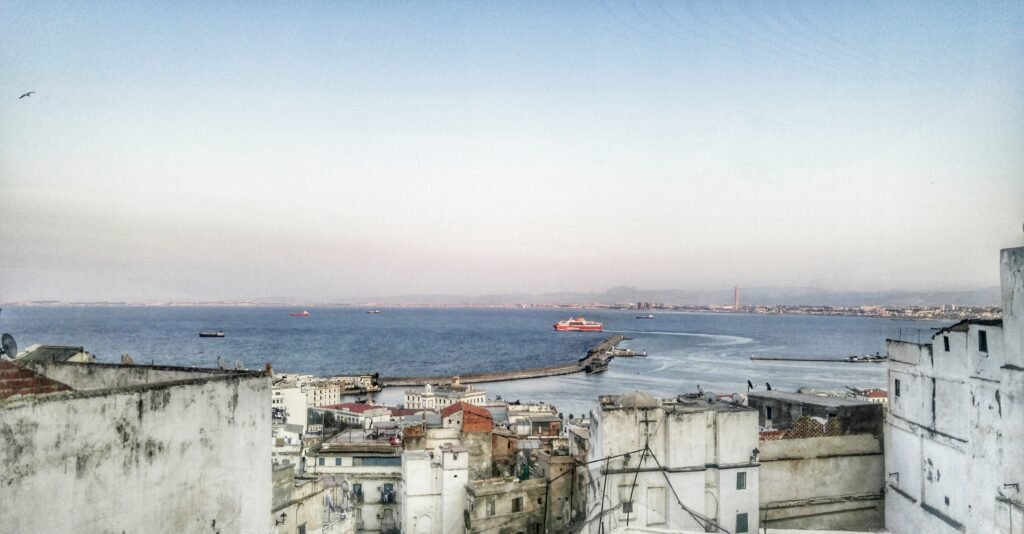
Guide: Algiers. The Kasbah, the old hillside medina above the port, has been on the UNESCO list since 1992. The Roman ruins of Tipasa, on the coast west of the capital, were listed in 1982.
Oran
Guide: Oran. The western port city sits in the same normal-precautions zone as Algiers. The land border with Morocco, farther west, has been shut since 1994.
Constantine and the Roman east
The region’s two great Roman towns, Djemila and Timgad, are World Heritage Sites, but they lie in Setif and Batna provinces, which the French ministry advises against visiting unless essential. Weigh that before building a trip around them.
Ghardaia and the M’zab Valley
The M’zab Valley around Ghardaia has been a World Heritage Site since 1982, and Ghardaia province qualifies a tour for the visa on arrival. South of it, toward In Salah, the French ministry reports banditry in isolated stretches.
The deep south: Tamanrasset, Djanet, Tassili n’Ajjer
Tassili n’Ajjer is Algeria’s only World Heritage Site listed for both its natural and its cultural value. Visits around Tamanrasset require a guide, and the French ministry recommends a licensed agency. Areas along the Mali, Niger, and Libya borders are off-limits under its advice.
Whether you want a guide for the Kasbah, a half day at Tipasa, or a desert circuit, the button below lists our partner GetYourGuide’s Algeria offers. For anything in the south, ask the operator to confirm it is a licensed Algerian agency, since that is what the visa on arrival depends on.
See Algeria tours and activities on GetYourGuide
Best time to visit Algeria: the coast and the Sahara run on different calendars
The Mediterranean coast around Algiers and Oran and the Saharan south are two very different climates, so plan each leg on its own terms. For the heat, the French foreign ministry advises drinking plenty of water and staying out of the sun during the hottest hours. For forecasts and observed data, check Algeria’s National Meteorological Office (ONM) before you lock in dates.
Vaccines, water, and travel insurance for Algeria
The CDC wants every international traveler fully vaccinated against measles. For Algeria it also recommends hepatitis A for unvaccinated travelers one year and older, hepatitis B for unvaccinated travelers under 60, and typhoid for most visitors. Poliovirus has been detected in the country in the past year, so adults who had the childhood series can get a one-time booster.
Rabies is common in dogs, and post-exposure shots may only be found in larger cities; ask your doctor whether pre-travel rabies vaccination fits your plans. The French ministry advises sealed or treated water only and no raw vegetables or street food.
Insurance is not optional here: the embassy asks for an insurance and repatriation certificate with the visa file. Our partner SafetyWing Nomad Insurance lists up to $250,000 for medical treatment and a $100,000 lifetime cap on medical evacuation. Check that its documents meet the consulate’s requirements and that you qualify, on the quote page.
Reader perk: first-time SafetyWing customers on a Nomad Essential plan, billed every 28 days or yearly, can use the code ADVISEDTRAVELER for 8 weeks of the Electronics Theft add-on. Tap the pink camera icon on the Nomad Insurance page and enter the code before you create your account; after 8 weeks, the add-on renews as a paid option. Readers living in Europe can also look at Chapka Cap Assistance, which does not cover U.S. residents.
Money in Algeria: bring cash, declare it, keep the receipt
The currency is the Algerian dinar (DZD), and only residents may carry dinars in or out, up to 10,000 DZD. Visitors therefore arrive with foreign cash and exchange it locally. Card withdrawals are difficult, the French ministry says, so plan on exchanging cash rather than relying on ATMs.
- Customs declaration: cash or negotiable instruments in convertible currency worth €1,000 or more must be declared on arrival and on departure.
- Leaving with leftover cash: you can take out unused foreign currency only with the import declaration stamped by a bank or exchange office.
- Drones, binoculars, GPS units: import rules are very strict, so leave them home unless you have cleared them in advance.
Staying connected: check your U.S. carrier’s international rates for Algeria before you go. Our partner Yesim sells an Algeria eSIM you can set up at home, if your phone supports eSIM.
Distances are vast, and the French ministry suggests flying for long trips. Main roads are generally in good shape but busy, and banditry targets secondary and mountain roads, so stick to the main routes.
Photos, dress codes, and Ramadan rules in Algeria
- Photography: never photograph government buildings or embassies. Taking pictures of people in public can also lead to trouble with the police.
- Posting online: content meant for publication can be treated as journalism, even if unpaid. Say so when you apply for the visa; reporting requires accreditation.
- Dress: keep it modest. Foreign women do not have to wear a veil except in mosques, where shoulders and legs must be covered and women cover their hair. Nudity and topless sunbathing are banned on beaches.
- Ramadan: eating, drinking, and smoking in public are banned from sunrise to sunset, and breaking local customs can lead to prosecution.
- Drugs: possessing or using any drug is a crime.
- Weekend and plugs: the weekly rest days are Friday and Saturday. Power is 220-230 volts with European two-pin plugs, so bring an adapter and check that your chargers are dual-voltage.
Where to stay in Algeria
Your visa file needs proof of lodging, so book early, ideally with free cancellation in case the visa is delayed. The map below opens on Algiers; type Oran, Constantine, or Ghardaia into its search box to switch cities.
Compare places to stay in Algeria, with current prices and reviews
Algeria travel FAQ
Do U.S. citizens need a visa for Algeria?
Yes. Apply to the embassy in Washington or the consulate in New York, depending on your state. The fee is $160 and processing takes about 5 to 8 business days.
How long must my passport be valid for Algeria?
At least six months, according to the Embassy of Algeria in Washington.
Is Algeria safe for American tourists?
The French ministry rates Algiers and Oran as normal-precaution areas and advises against border regions and several northern provinces. Read the State Department’s current Algeria advisory as well before booking.
Can I use credit cards or ATMs in Algeria?
Do not count on them: the French ministry says withdrawals are difficult and recommends exchanging cash. Declare €1,000 or more in foreign currency at customs.
Can I visit the Algerian Sahara on my own?
Not around Tamanrasset, where a guide is mandatory. A tour run by a licensed agency also opens the door to a visa on arrival of up to 30 days.
Sources
All pages read on October 16, 2026; UNESCO and French Senate pages consulted on October 21, 2026.
- Embassy of Algeria in Washington, Entry visa to Algeria (jurisdictions, documents, $160 fee, processing times).
- Centers for Disease Control and Prevention, Algeria, Traveler View (vaccines, rabies, polio; last reviewed August 25, 2026).
- French Ministry for Europe and Foreign Affairs, Algeria advisory (in French): Entry, Security, Health, and Practical information (updated September 15, 2026).
- UNESCO World Heritage Centre, Algeria (in French; 7 listed properties, Tassili n’Ajjer listed as mixed).
- French Senate, Algeria country file (in French; area of 2,381,741 km², or 919,595 sq mi, and the Algerian dinar).
Maintained by the Advised Traveler team. Visa fees and safety maps change, so recheck the embassy page and the State Department advisory in the week before you fly. Spotted an error? Let us know.