
Fiji Travel Guide: Which Islands to Pick, When the Dry Season Runs, Entry Rules for Americans, and Paying in Fiji Dollars
How the Mamanuca, Yasawa, Taveuni, and Kadavu groups differ, what the cyclone months look like in inches of rain, what to carry through Nadi immigration, and why cash beats cards.
- 4 months visa-free for U.S. passport holders
- 330+ islands, about 110 inhabited
- 14.4 in of January rain at Nadi, 2.0 in July
- 2 to 5% surcharge on most card payments
Fiji is an archipelago of more than 330 islands, about 110 of them permanently inhabited. International flights land at Nadi, on the west coast of Viti Levu, the largest island, and the capital, Suva, sits on its southeast corner. The real decisions are which island group to base yourself on and which months to avoid.
Entry rules here come from Tourism Fiji’s official visa page and Wikipedia’s visa table for U.S. citizens, health advice from the CDC, and safety and money details from the French foreign ministry’s Fiji advisory, updated September 15, 2026. The State Department’s Fiji page refused our reading tools, so read it yourself before you book. Everything was checked on October 16, 2026.
Advised Traveler is free to use. If you find our content useful, you can support us by booking through our affiliate links: we earn a commission at no extra cost to you.
- Best time to visit
- Which islands to visit
- Entry for U.S. citizens
- Currency and cards
- Vaccines and insurance
- Safety
- Getting around
- Village customs
- Where to stay
- FAQ
- Sources
Best time to visit Fiji: May through October, outside cyclone season
Temperature barely changes: average highs at Nadi range from 83°F in July to 89°F in February. Rain is what sets the seasons. From May through October, Nadi gets under 4 inches a month. From December through March it gets more than 8, and those months fall inside the cyclone season, which runs from early November to the end of April.
- Jan 14.4 in
- Feb 13.2 in
- Mar 13.8 in
- Apr 7.4 in
- May 3.6 in
- Jun 2.2 in
- Jul 2.0 in
- Aug 2.5 in
- Sep 2.8 in
- Oct 3.4 in
- Nov 5.0 in
- Dec 8.3 in
Average monthly rainfall at Nadi International Airport, 1991-2020 normals. Yellow: under 4 inches. Light blue: 4 to 8 inches. Dark blue: over 8 inches.
| Month | Nadi (west) | Suva (southeast) |
|---|---|---|
| Jan | 14.4 in | 13.5 in |
| Feb | 13.2 in | 10.9 in |
| Mar | 13.8 in | 13.4 in |
| Apr | 7.4 in | 13.2 in |
| May | 3.6 in | 9.2 in |
| Jun | 2.2 in | 6.2 in |
| Jul | 2.0 in | 5.4 in |
| Aug | 2.5 in | 5.7 in |
| Sep | 2.8 in | 7.4 in |
| Oct | 3.4 in | 9.8 in |
| Nov | 5.0 in | 9.7 in |
| Dec | 8.3 in | 13.6 in |
World Meteorological Organization 1991-2020 normals as published on Wikipedia (Nadi airport; Suva at Laucala Bay). Over a year, Nadi averages about 79 inches and Suva about 118, so the west side of Viti Levu is the drier bet even in the dry season.
If a cyclone is forecast: head back to your hotel as soon as the pre-alert is issued and stay put until the all-clear; a curfew is possible. Storm damage can shut international airports for several days. Fiji’s meteorological service and its National Disaster Management Office post the alerts.
Which Fiji islands to visit: Viti Levu and the outer groups
The Mamanuca and Yasawa groups fan out west and northwest of Nadi; Taveuni lies to the northeast and Kadavu to the south. Fiji Airways flies the domestic routes, per the French ministry. Suva is the only Fiji city with its own guide on our site so far, and it has not yet been rebuilt with dated sources.
Nadi and western Viti Levu
Your arrival point, and the drier side of the main island. The Coral Coast runs along the south shore between Sigatoka and Suva. The French ministry reports evening assaults near Nadi’s bars and nightclubs, so go out in a group.
Suva
Guide: Suva. Fiji’s capital and main port covers a hilly peninsula between Laucala Bay and Suva Harbour. After dark, stick together on Victoria Parade, where the French ministry has recorded incidents near the big hotels.
Mamanuca Islands
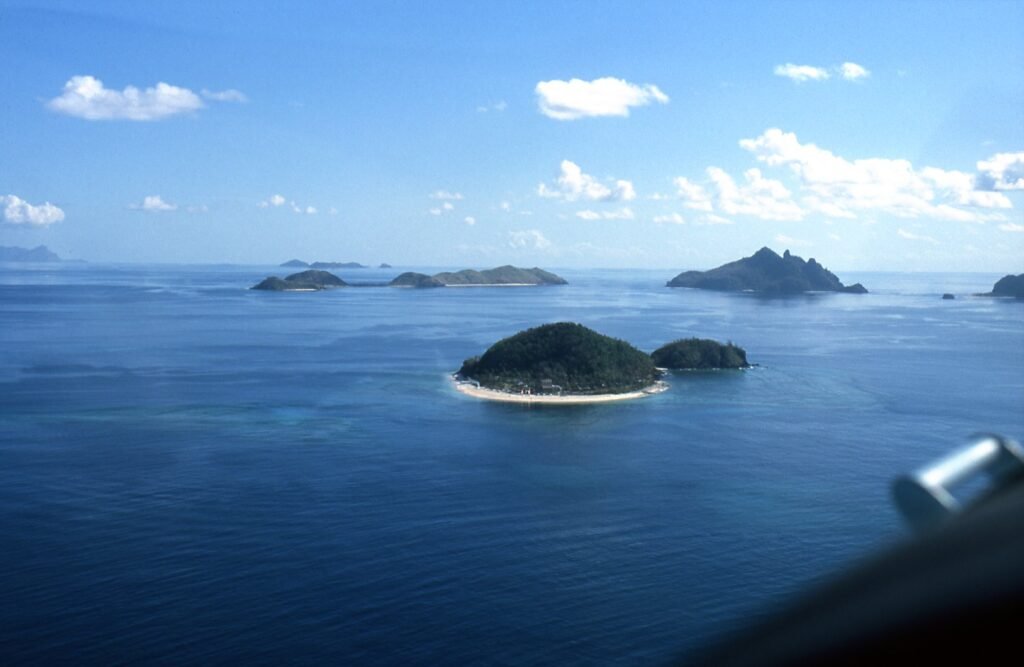
About 20 volcanic islands west of Nadi, roughly seven of which disappear under the sea at high tide. It is a popular resort area, with sandy beaches and live coral reefs for snorkeling.
Yasawa Islands
Six main islands and many islets, volcanic and mountainous, strung out for more than 50 miles to the northeast from a point about 25 miles northwest of Lautoka.
Taveuni and Kadavu
Taveuni, Fiji’s third-largest island at 168 square miles, is a single shield volcano about 4 miles east of Vanua Levu. Kadavu, the fourth largest, lies 55 miles south of Suva, edged by the Great Astrolabe Reef, with an airport at Vunisea.
Levuka on Ovalau
Fiji’s capital until 1877, when the administration moved to Suva. The old port town on Ovalau’s east coast became a UNESCO World Heritage Site in 2013.
For reef dives, a boat day out to the Mamanucas, or a guided village visit, the button below opens our partner GetYourGuide’s Fiji listings. Read the cancellation terms before booking anything on the water between November and April, when a cyclone alert can scrap the trip.
See all Fiji tours and activities on GetYourGuide
Do Americans need a visa for Fiji? No, but bring a return ticket
U.S. citizens are on Fiji’s visa-exempt list and get a visitor permit on arrival for up to 4 months. Tourism Fiji lists what immigration checks at the airport:
- Passport valid for at least six months beyond your planned stay.
- Return or onward ticket to a country you are allowed to enter. The French ministry notes that travelers without one have run into problems at Nadi airport.
- A confirmed address in Fiji, such as a hotel or resort booking.
- A completed arrival card.
Customs: meat, dairy products, seeds, and plants may not be brought in, and tobacco and alcohol are limited. Cash worth more than 10,000 Fiji dollars must be declared on arrival and departure.
Fiji currency: the Fiji dollar, cards, and surcharges
The currency is the Fiji dollar (FJD). Major credit cards are widely accepted in tourist areas and in Suva, while small shops prefer cash. Most merchants add 2 to 5% to every card payment, and the French ministry reports a rise in card skimming tied to outdated payment terminals. Paying cash avoids both; if you do use a card, watch your statement.
We do not quote a daily budget: none of the official sources we read publishes lodging or transfer prices. The Stay22 map and buttons on this page show current rates by island.
Staying connected: check what your U.S. carrier charges for roaming in Fiji. Our partner Yesim sells a Fiji eSIM you can install before you fly, if your phone supports eSIM.
Vaccines, mosquitoes, and travel insurance for Fiji
The CDC recommends hepatitis A for unvaccinated travelers one year and older, hepatitis B for unvaccinated travelers under 60, typhoid for most travelers, and a full measles vaccination for every international trip. Yellow fever vaccine is not required when you fly in directly from the United States. Rabid dogs are not commonly found in Fiji.
- Dengue and Zika: both spread by mosquito bites. Local health authorities report rising dengue cases in the west, north, and center of the country, so use repellent and cover up.
- Leptospirosis: cases are up in every division. Avoid wading in floodwater or stagnant fresh water.
- Fish: from November to April, skip mid-water reef fish, which can carry ciguatera toxins.
- Dairy: brucellosis affects local herds, so avoid unpasteurized milk and dairy.
The French ministry advises insurance that covers the knock-on effects of a cyclone, such as canceled flights and closed airports. Our partner SafetyWing Nomad Insurance lists up to $250,000 for medical treatment and a $100,000 lifetime cap on medical evacuation, a figure worth weighing if you will be on a remote island. Check eligibility and what is covered on the quote page.
Reader perk: first-time SafetyWing customers on a Nomad Essential plan, billed every 28 days or yearly, can use the code ADVISEDTRAVELER for 8 weeks of the Electronics Theft add-on. Tap the pink camera icon on the Nomad Insurance page and enter the code before creating your account; after 8 weeks, the add-on renews as a paid option. Readers living in Europe can also look at Chapka Cap Assistance, which is not open to U.S. residents.
Is Fiji safe? Theft, nights out, and rip currents
The French ministry describes crime as rising sharply. Pickpocketing and scams concentrate in markets, and break-ins hit hotels as well as homes, so pick a property with an in-room safe. Theft spikes around Diwali and Christmas. Sexual assaults have been reported in the west, where most visitors stay: avoid walking alone or on isolated paths, day or night.
Drownings happen every year, and currents around reefs can be very strong off deserted beaches. Divers should ask their operator about sharks before heading out.
Getting around Fiji: daytime driving and domestic flights
- Rental cars are generally in good condition, but the two-lane roads rut badly after storms. Speed limits are about 31 mph in towns, 37 mph on their outskirts, and 50 mph elsewhere, with frequent checks.
- No night driving: roads are unlit, with pedestrians and stray animals on the pavement, and emergency help is almost nonexistent outside towns.
- Boats: fatal sinkings in the region and some aging vessels are reasons to avoid long open-sea crossings.
Village customs, beach access, and local laws
- Villages: cover your shoulders and legs, and ask about etiquette and access rules before you go in.
- Beaches: near villages, make sure access is allowed and the beach is not private land. Topless sunbathing is not permitted.
- Off-limits islands: some islands are closed to visitors; yachts are always refused permission for the Lau Group and Bau.
- Drugs: any use or possession, even of tiny amounts, can bring up to six years in prison plus fines.
Where to stay in Fiji: an island resort or a base on Viti Levu
Book before you fly, since immigration asks for a confirmed address. Between November and April, a refundable rate gives you room to move if a storm closes the airport. The map opens on Nadi; type Suva, Taveuni, or an island name into its search box to switch areas.
Compare places to stay in Fiji, with current prices and reviews
Fiji travel FAQ
Do I need a visa to visit Fiji from the U.S.?
No. U.S. passport holders receive a visitor permit on arrival for up to 4 months. Bring a passport valid six months beyond your stay and a return or onward ticket.
What currency is used in Fiji?
The Fiji dollar (FJD). Cards work in tourist areas and Suva, usually with a 2 to 5% surcharge, so carry some cash for small shops.
What is the best time to visit Fiji?
May through October, when Nadi averages under 4 inches of rain a month and cyclone season is over.
What is the weather like in Fiji in February?
Hot and wet: Nadi averages a high of 89°F and 13.2 inches of rain, and February falls in cyclone season.
What is the capital of Fiji?
Suva, on the southeast coast of Viti Levu. Levuka, on Ovalau, held the title until 1877.
What languages are spoken in Fiji?
English, Fijian, and Fiji Hindi, all recognized in the 2013 Constitution.
Sources
All pages read on October 16, 2026.
- Tourism Fiji, Fiji Visas (documents checked on arrival, visa-exempt visitor permits).
- Centers for Disease Control and Prevention, Fiji, Traveler View (vaccines, rabies, yellow fever; last reviewed August 25, 2026).
- French Ministry for Europe and Foreign Affairs, Fiji advisory (in French): Entry, Security, Health, and Practical information (updated September 15, 2026).
- Wikipedia: Visa requirements for United States citizens (Fiji: visa not required, 4 months), Nadi and Suva (WMO 1991-2020 normals), Fiji, Mamanuca Islands, Yasawa Islands, Taveuni, Kadavu Island, Levuka.
Maintained by the Advised Traveler team. Entry rules can change without notice, so recheck Tourism Fiji’s visa page and the State Department’s Fiji page in the week before you fly. Spotted an error? Let us know.