
Planning a Trip to Peru: Passport Rules, Altitude Sickness, the Dry Season, and Machu Picchu Tickets
Our Peru city guides, the 2026 daily limits at Machu Picchu, how to handle Cusco’s elevation, the Andean rainy season, and what U.S. travelers need at the border.
- 11,152 ft elevation in Cusco
- 6 months of passport validity required
- 5,600 visitors a day, the 2026 peak-season cap at Machu Picchu
- 13 UNESCO World Heritage sites
Peru covers roughly 496,000 square miles and runs from a desert coast through the Andes into the Amazon basin. Around 34 million people live here, and the currency is the sol. Most first trips trace the same southern arc: Lima, Arequipa, Lake Titicaca, Cusco, and Machu Picchu.
This page links our Peru city guides and collects what to sort out before you book. Health guidance comes from the CDC, entry rules from Peru’s immigration agency and France’s foreign ministry, Machu Picchu limits from Peru’s official gazette, country figures from INEI and UNESCO, and elevations from PromPerú, Peru’s Ministry of Culture, and the Ramsar Convention. Check the U.S. State Department’s current advisory level for Peru before you go. Everything else was checked on October 16 and 20, 2026.
Advised Traveler is free to use. If you find our content useful, you can support us by booking through our affiliate links: we earn a commission at no extra cost to you.
- Cities and regions
- Machu Picchu tickets
- Altitude sickness
- Entry rules for Americans
- Best time to visit
- Sample routes
- Is Peru safe?
- Vaccines and insurance
- Where to stay
- FAQ
- Sources
Where to go in Peru: our city guides
Four Peruvian destinations have their own guide on our site so far. None has been rewritten with dated sources yet; Arequipa is next in line.
Cusco and the Sacred Valley
The former Inca capital and the usual base for Machu Picchu, Cusco sits at 11,152 feet. Give yourself a slow first day here before any hiking.
Machu Picchu
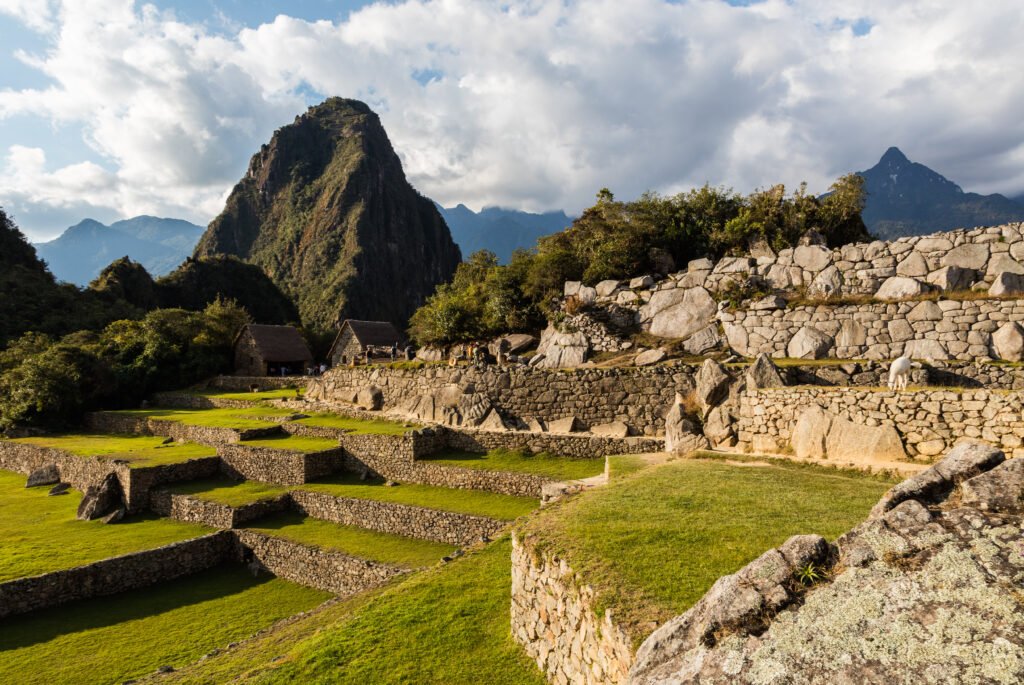
The Inca citadel of Machu Picchu stands on a ridge at about 7,990 feet, well below Cusco. PeruRail and Inca Rail trains run to Aguas Calientes, the town on the Urubamba River below the ruins, where buses climb to the site.
Lima
Lima, the capital, sits on the Pacific coast. France’s foreign ministry advises against the historic center after dark and reports armed robberies in Miraflores, San Isidro, and Barranco, so take a registered taxi at night rather than walking alone.
Arequipa
At 7,661 feet, Arequipa makes a useful halfway step between the coast and the highlands. The CDC lists it, like Cusco and Puno, among the places with no malaria transmission.
Lake Titicaca and the Amazon
We don’t have guides for these yet. Lake Titicaca lies at 12,507 feet, the highest stop on most southern routes. Iquitos and Puerto Maldonado, the Amazon gateways, are in malaria areas where the CDC recommends preventive medication, and the yellow fever vaccine is recommended there too.
How to get Machu Picchu tickets in 2026
Peru’s Ministry of Culture caps daily entries. For 2026, according to the official gazette El Peruano, up to 5,600 visitors a day are admitted on January 1, April 2 to 5, June 19 to November 2, and December 30 and 31, and 4,500 a day the rest of the year. Tickets are sold online only, through tuboleto.cultura.pe.
Book in this order: entry ticket first, then your train and any hotel in Aguas Calientes, especially for dates between late June and early November. We haven’t listed ticket prices because we didn’t read them on the official portal today.
Guided tours of the citadel, train packages from Cusco, and Sacred Valley day trips are listed by our partner GetYourGuide; the button below opens its Peru results. Read each listing to see whether the Machu Picchu entry ticket is included or has to be bought separately.
See Peru tours and activities on GetYourGuide
Altitude sickness in Cusco and Lake Titicaca: how to prepare
The CDC notes that many of Peru’s most popular destinations are at high altitude and advises talking to your doctor about preventing and treating altitude sickness before you go. France’s foreign ministry puts the risk threshold at about 8,200 feet (2,500 m), where headache, nausea, fatigue, and shortness of breath can set in if the body hasn’t had time to adjust.
- Go up gradually: above 8,200 feet, the ministry recommends gaining no more than about 1,300 feet (400 m) between one night’s sleep and the next.
- Take it easy: limit exertion for the first days, drink plenty of water, and skip alcohol and heavy meals.
- If symptoms appear: stop climbing, head down with a companion to below 13,100 feet at least, and see a doctor.
Who should check with a doctor first: the same ministry advises against high altitude for young children, and lists pregnancy and heart, lung, neurological, or kidney conditions as contraindications.
Do U.S. citizens need a visa for Peru?
No visa is needed for a tourist trip. What matters is your passport and the number of days the immigration officer grants you on arrival.
- Passport: valid for at least six months, according to Peru’s immigration agency, Migraciones. Travelers who don’t meet the rule are refused entry and sent back.
- Length of stay: Migraciones says it can grant tourists up to 183 days. Ask for the number of days you need and check what was recorded.
- No stamp at the airport: since May 29, 2023, arrivals by air in Lima, Arequipa, Cusco, Chiclayo, and Trujillo are recorded electronically. You can download your virtual Andean Migration Card (TAM) from the Migraciones website to prove your legal stay.
- Land borders: a physical stamp is still required at every crossing; missing it can lead to detention and deportation.
Overstaying costs money: Migraciones charges a fine for each extra day, set at 0.1 percent of Peru’s tax unit (UIT). Check your granted stay on the virtual TAM before you plan a long trip.
Best time to visit Peru: dry season in the Andes
In the Andes, rain sets the calendar. France’s foreign ministry places the mountain rainy season from January to May, when floods and landslides can cut roads. For month-by-month normals in Cusco, Arequipa, or Puno and for weather alerts, the reference is SENAMHI, Peru’s national weather service.
How many days in Peru? Routes for 10 days to 3 weeks
Plan the order of your stops around elevation. Flying straight from Lima to Cusco means a jump of more than 11,000 feet in one morning; working up through Arequipa spreads it out.
- About 10 days: Lima, Cusco, and the Sacred Valley, then Machu Picchu with a night in Aguas Calientes.
- Two weeks: Lima, Arequipa, Puno and Lake Titicaca, then Cusco and Machu Picchu. The leg from Arequipa up to Puno is still a big climb, so keep your first day there light.
- Three weeks: the two-week loop plus a few days in the Amazon, after a travel clinic visit for yellow fever and malaria.
No travel times here: we haven’t checked them against official schedules. France’s foreign ministry calls domestic flights the most practical way to cover Peru’s distances, and describes mountain roads as difficult and often dangerous.
Is it safe to travel to Peru? Areas to avoid and taxi tips
France’s foreign ministry, whose zone map was last revised on March 11, 2026, rates crime in Peru as lower than in some other Latin American countries, but not absent. It advises against all travel to the VRAEM valleys (Apurímac, Ene, and Mantaro rivers) and to the Amazon border with Colombia along the Putumayo River, both far from the usual tourist routes, and against nonessential travel to Abancay and the Huánuco region.
- At Lima’s airport: book your taxi inside the terminal and don’t walk around the Callao area. Ignore anyone posing as airline staff who offers help after a missed connection; go to the airline counter.
- Taxis: use official companies or ride-hailing apps. A legitimate car shows its plate number on the front, back, and both sides, with the driver’s photo inside. Don’t flag cabs on the street.
- Drinks and wellness retreats: drink spiking has been reported, as have sexual assaults in hostels and at spiritual retreats. Research any retreat thoroughly and never leave a drink unattended.
- Protests: demonstrations can turn violent and block tourist routes, so watch for announced strikes.
Peru’s tourist assistance service, iPerú, has a desk in the Lima airport baggage hall and answers questions on WhatsApp at +51 944 492 314.
Vaccines, malaria, and travel insurance for Peru
The CDC recommends being up to date on routine vaccines, including MMR, plus hepatitis A for unvaccinated travelers and hepatitis B for those under 60. Typhoid is worth considering for rural trips or stays of a month or more.
- Yellow fever: not required for entry. Recommended for areas below 7,550 feet in Amazon regions such as Loreto and Madre de Dios, but not for travel limited to Lima, the city of Cusco, the Inca Trail, and Machu Picchu.
- Malaria: present below 8,200 feet east of the Andes, including Iquitos and Puerto Maldonado, where the CDC recommends preventive medication. No transmission in Lima, Arequipa, Puno, Cusco, Machu Picchu, or Lake Titicaca.
- Water: France’s foreign ministry advises drinking only bottled, filtered, or boiled water.
Medical care is where costs add up: France’s foreign ministry notes that Lima’s private clinics are well equipped but usually want payment up front, with a credit card taken at admission. Our partner SafetyWing Nomad Insurance Essential accepts U.S. residents; check its plan page for limits, exclusions, and any altitude cap if you plan to trek.
New SafetyWing customers who enter code ADVISEDTRAVELER get the Electronics Theft add-on free for 8 weeks on 28-day subscription or annual Nomad Essential plans. Tap the pink camera icon on the Nomad Insurance page and enter the code before creating your account; after 8 weeks, the add-on renews as a paid option. If you live in Europe, Chapka’s Cap Assistance 24/7 is another option; it isn’t open to U.S. residents.
Staying connected: U.S. carriers charge for international use unless your plan includes Peru, so check before you fly. Our partner Yesim sells a Peru eSIM you can install at home and switch on when you land.
Where to stay in Peru
Each destination card above has its own hotel link. The map below opens on Cusco; type Lima, Arequipa, or Puno into its search box to move it. France’s foreign ministry suggests that women traveling alone avoid mixed dorms.
Compare hotels across Peru with recent prices and reviews
Peru trip planning FAQ
Do Americans need a visa to visit Peru?
No, not as tourists. You need a passport valid for at least six months.
How long can U.S. citizens stay in Peru?
The officer sets the length at entry. Migraciones can grant up to 183 days. Check the figure on your virtual TAM.
Do I need a yellow fever vaccine for Peru?
It isn’t required to enter. The CDC recommends it for lower-elevation Amazon areas, not for trips limited to Lima, Cusco, and Machu Picchu.
When is the best time to visit Machu Picchu?
Outside the Andean rainy season, which France’s foreign ministry places from January to May. From June 19 to November 2, the higher 5,600-a-day cap applies in 2026, so book tickets early.
How do I avoid altitude sickness in Cusco?
Ascend in stages, take the first days slowly, and ask your doctor about prevention before the trip. Descend if symptoms get worse.
What should I be careful about when visiting Peru?
Unregistered taxis, Lima’s historic center after dark, drink spiking, and road travel at night in the mountains. Check the State Department advisory before you go.
Sources
Pages checked on October 16, 2026; INEI, UNESCO, PromPerú, Ministry of Culture, and Ramsar sources checked on October 20, 2026.
- CDC, Peru traveler view (yellow fever updated February 12, 2026; malaria updated April 23, 2025).
- Andina, Peru’s state news agency, Migraciones recommendations for foreign visitors (passport validity, stay of up to 183 days, overstay fine; in Spanish).
- France Diplomatie (French Ministry for Europe and Foreign Affairs), Peru: entry, safety, health, and practical information (updated September 21, 2026; in French).
- El Peruano, Ministry of Culture sets 2026 daily cap at Machu Picchu (November 2, 2025; in Spanish).
- INEI, Peru’s National Institute of Statistics, A Glimpse of Peru in Figures (April 2025: land area, population projected for June 30, 2025).
- UNESCO, World Heritage List: Peru (13 properties).
- PromPerú, Peru’s tourism board, traveler guides for Cusco (2023) and Arequipa (elevations; in Spanish).
- Peru’s Ministry of Culture, Machupicchu National Archaeological Park, Llaqta de Machupicchu (elevation; in Spanish).
- Ramsar Convention, Lake Titicaca, Peruvian sector, information sheet (elevation; in Spanish).
- Wikipedia, Machu Picchu (Aguas Calientes and trains, for background).
Maintained by the Advised Traveler Team. Peru’s risk zones and border rules can change quickly, so recheck official advice in the week before you fly. Spot an error? Let us know.