
Bulgaria Travel Guide: Euros, Passport Rules, Road Tolls, and Six Cities From Sofia to the Black Sea
What changed when Bulgaria switched to the euro, what U.S. passport holders need at the border, the electronic road toll, Sofia taxis, health insurance, and our city guides.
- Jan 1, 2026 the day Bulgaria joined the euro area
- 90 days visa-free for U.S. tourists
- 3 months of passport validity past your departure date
- 112 for emergencies
If your last trip to Bulgaria was a few years ago, two things work differently now. You pay in euros, the only legal tender since February 1, 2026, and there are no more internal border checks with the rest of the Schengen area. What hasn’t changed: a U.S. passport with enough validity left, and a road network the French foreign ministry ranks among the deadliest in the EU.
We drew on the State Department, France’s foreign ministry (pages updated September 15, 2026), the European Parliament’s research service, and UNESCO, and grouped our six Bulgarian city guides by region below.
Advised Traveler is free to use. If you find our content useful, you can support us by booking through our affiliate links: we earn a commission at no extra cost to you.
- Euros and old leva
- Entry rules for Americans
- Where to go
- Driving and road tolls
- Health insurance
- Safety and taxis
- Where to stay
- FAQ
- Sources
What currency does Bulgaria use? The euro, since 2026
On January 1, 2026, Bulgaria became the 21st EU member state to adopt the euro, according to the European Parliament’s research service. The lev stopped circulating on February 1, 2026. If you still have leva from an earlier trip, commercial banks exchange them through the end of 2026, and the Bulgarian National Bank takes them free of charge with no cap.
Carrying cash: amounts of 10,000 euros or more must be declared on entry and exit, the State Department says.
Do Americans need a visa for Bulgaria?
No, not for stays under 90 days on a regular passport. The State Department sets the limit at 90 days within a six-month period, and Bulgaria has been a full member of the Schengen area since January 1, 2025, when land border checks were lifted following a Council of the EU decision of December 12, 2024.
- Passport: valid at least three months beyond the date you leave Bulgaria, with one blank page for stamps.
- Health insurance: visitors are required to have medical coverage for their entire stay.
- Travel advisory: “exercise normal precautions,” on a State Department country page last updated July 26, 2023.
Where to go in Bulgaria: Sofia, the historic towns, the Black Sea, and Pirin
Inland, two historic towns have their own guides: Veliko Tarnovo and Plovdiv, both an easy add-on to a Sofia stay. The cards below cover the capital, the coast, and the mountains.
Sofia
Most international trips start in the capital. The French foreign ministry advises avoiding the area around Sofia’s train station and not walking outside the center at night. What to see and which neighborhood to book: our Sofia guide.
- Getting around: taxi rates quoted by the French ministry are 1.24 euros per kilometer by day and 1.52 euros at night (about 2.00 and 2.45 euros per mile). Be careful at the airport.
- Cab companies it names: Yellow!, OK Supertrans, and CB Taxi.
Nessebar
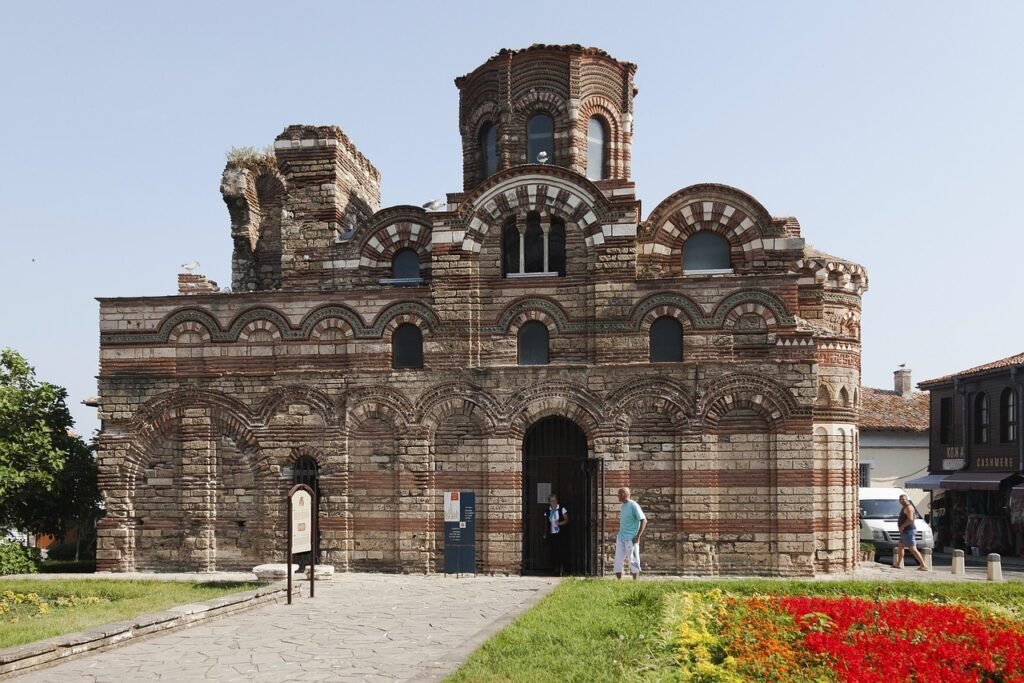
On a rocky peninsula on the Black Sea, the Ancient City of Nessebar has been a UNESCO World Heritage site since 1983. UNESCO traces more than 3,000 years here: a Thracian settlement, a Greek colony from the early 6th century BC, a medieval basilica and fortress, and 19th-century wooden houses typical of the coast. See our Nessebar guide.
- Don’t miss: the Stara Mitropolia basilica, named in UNESCO’s description.
- Keep in mind: the protected old town covers only about 86 acres, and UNESCO flags heavy tourist pressure.
Varna and the beaches
Farther north on the same coast, Varna is Bulgaria’s other big seaside city. Before you swim, note the French ministry’s warning that beaches are rarely guarded and that currents cause drownings. Our Varna guide covers the city.
- Best for: a beach stay paired with a day in Nessebar.
- No camping: pitching a tent on beaches or dunes is not allowed.
Bansko and Pirin National Park
Pirin National Park joined the World Heritage list in 1983 and was extended in 2010. It rises from about 3,300 to 9,560 feet and holds more than 70 glacial lakes. Bansko, on the park’s edge, grew around its ski area and is one of Bulgaria’s fastest-developing towns, UNESCO notes. Our Bansko guide has the details.
- Hiking: trails are not always marked; carry a map and leave your route with someone.
- Ticks: in forests, wear long sleeves, use repellent, and check yourself after every walk.
Sofia walking tour, a day trip to Plovdiv, or a mountain outing: the button below opens Bulgaria tours from our partner GetYourGuide. On day trips from the capital, check the scheduled return time, since driving outside towns after dark is best avoided.
See all Bulgaria tours and activities on GetYourGuide
Driving in Bulgaria: e-vignette, headlights on, no night driving
The French foreign ministry rates road risk as high and Bulgaria’s traffic death rate among the highest in the EU. It advises against driving outside built-up areas at night and strongly against riding motorcycles or scooters. Stray dogs and snow, from November through April, add to the hazards.
- Road toll: the vignette is electronic and sold on the official site, web.bgtoll.bg. Driving without one means a 35-euro fine that can rise to 150 euros.
- Headlights: low beams on year-round, day and night.
- Alcohol: the limit is 0.5 g/l, stricter than the 0.08% standard in most U.S. states.
Health insurance for Bulgaria: required, and paid up front
Bulgaria requires visitors to carry medical insurance for their whole stay, and doctors and hospitals expect payment up front, according to the State Department, which adds that care in rural areas may fall below U.S. standards. Check what your own U.S. health plan covers abroad before you go.
SafetyWing Nomad Insurance is one travel medical option; check its quote page for eligibility, limits, and whether skiing or hiking in Pirin is covered. Readers living in Europe can compare Chapka’s Cap Assistance plan.
Ticks in spring and summer: tick-borne encephalitis circulates mostly in those seasons, in rural and wooded areas, says the French ministry, which suggests vaccination for that kind of stay. Ask a travel clinic before a hiking trip.
For phone data, our partner Yesim offers a Bulgaria eSIM; compare it with your U.S. carrier’s international plan for the length of your trip. Make sure your phone is unlocked and eSIM-compatible.
Is Bulgaria safe to visit?
Yes, with ordinary precautions. The State Department’s guidance is to exercise normal precautions, and the French ministry places the whole country at its lowest alert level, describing crime as generally low. The risks it lists are burglaries, credit card fraud, and theft of late-model cars, SUVs especially.
- Documents: carry a copy or scan of your passport and your insurer’s phone number.
- Exchanging old leva: only at banks or recognized exchange offices.
- Earthquakes: small tremors (magnitude 2 to 3.4) happen almost daily; the magnitude 6.9 Aegean quake of May 24, 2014 was felt in Bulgaria at magnitude 4.
Where to stay in Bulgaria
A first trip usually starts in Sofia, then loops to Plovdiv and Veliko Tarnovo or heads east to the Black Sea. Since night driving is best avoided, book each stop within a distance you can cover in daylight. The map opens on Sofia; type Plovdiv, Varna, or Bansko in its search box to move it.
Compare Sofia hotels, recent prices and reviews
Bulgaria travel FAQ
Do U.S. citizens need a visa to visit Bulgaria?
No, not for stays under 90 days within six months on a regular passport, according to the State Department. Your passport must be valid three months beyond your departure date.
Does Bulgaria use the euro?
Yes. Bulgaria adopted the euro on January 1, 2026, and the lev stopped being legal tender on February 1, 2026.
Do I need travel insurance for Bulgaria?
Yes. The State Department says visitors are required to maintain medical insurance for the duration of their stay.
Do I need a vignette to drive in Bulgaria?
Yes. Buy the electronic vignette on web.bgtoll.bg before you drive; the fine is 35 euros and can reach 150 euros.
Is Bulgaria in the Schengen area?
Yes, fully since January 1, 2025, when checks at its land borders with other Schengen countries ended. Air and sea border checks had been lifted on March 31, 2024.
Sources
Checked on October 29, 2026.
- U.S. Department of State, Bulgaria International Travel Information (last updated July 26, 2023).
- European Parliamentary Research Service, Bulgaria to adopt the euro on 1 January 2026 (July 1, 2025).
- eucrim (Max Planck Institute), Bulgaria and Romania Fully Join Schengen.
- France Ministry for Europe and Foreign Affairs, Bulgaria pages updated September 15, 2026 (in French): safety, health, and practical information.
- UNESCO World Heritage Centre: Ancient City of Nessebar and Pirin National Park.
Written by the Advised Traveler team from the sources listed, without a site visit. Rules for U.S. travelers can change: check the State Department’s Bulgaria page before you book. Spotted an error? Let us know.